Tradition: The Passing of the Story
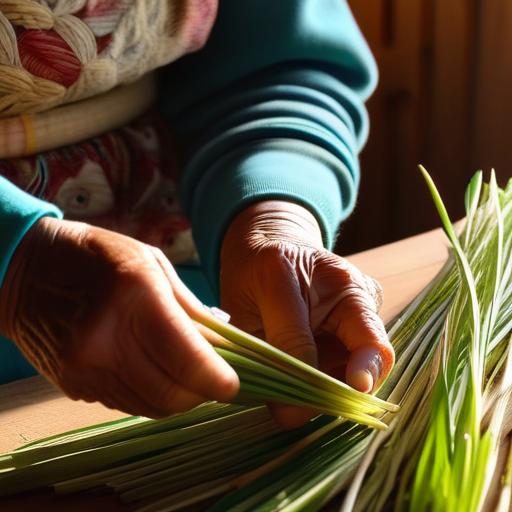
The Living Library
If all the books on ethnobotany were to vanish tomorrow, the knowledge of the prairie would survive. This is because, for thousands of years, the relationship between the people of the Great Plains and the plant world was not written; it was spoken. It was contained in the songs sung during the willow harvest, the stories told while peeling breadroot, and the warnings whispered by grandmothers to keep children away from the water hemlock.
In this 2,200-word deep dive, we explore the mechanics of the oral tradition, why “story” is a superior data-storage medium for survival, and the critical importance of intergenerational transmission in the modern revitalization of Plains Native foodways.
1. The Oral Tradition: More Than a Record
In the Western academic world, the oral tradition is often treated as a secondary or “unreliable” source—a placeholder until a “real” scientist can write the data down. But to the indigenous practitioner, the oral tradition is a rigorous, high-fidelity system of ecological management.
The Problem with the Page
A book is a static object. If a field guide says a plant is found in “moist meadows,” that information remains the same whether the meadow is in a ten-year drought or a flood. It is “de-contextualized data.”
The Dynamic Story
An oral tradition is context-aware. When an elder tells a story about harvesting Wild Onions, they are sharing information about the current state of the land. They are correcting the “data” based on the last winter’s snowpack and the arrival of new insect species. The story is a living algorithm that adjusts to the ecosystem’s fluctuations in real-time.
2. Story as a Mnemonic Device
Why do we remember a legend about a “trickster” more easily than a list of botanical traits? It is because the human brain is evolved for Narrative.

The Architecture of the Memory
- Characterization: When a plant like the Spiderwort (Tradescantia) is given a personality—perhaps as a shy traveler or a resilient warrior—it becomes an anchor in the memory. You do not just “remember” its three petals; you remember its “character.”
- Emotional Anchoring: Stories about plants are often connected to stories of family, survival, or humor. This emotional weight ensures that the “data” (identification, preparation, toxicity) is never forgotten.
- The Landscape as the Book: For the tradition-bearer, the prairie is the library. Every hill, every creek bend, and every notable plant patch is a “page” that triggers a specific story. You cannot walk five miles across ancestral lands without being reminded of a dozen ecological lessons.
3. Intergenerational Transmission: The Chain of Survival
The greatest threat to ethnobiological knowledge is not habitat loss (though that is severe); it is the “break in the chain.” If one generation does not pass the story to the next, the knowledge vanishes forever.
The Roles in the Chain
- The Elder (Knowledge Holder): The librarian of the oral history. Their role is not just to know, but to observe the youth and identify who among them has the “spirit for the plants.”
- The Youth (The New Seed): The primary harvesters. Children have a natural affinity for the earth, a proximity to the ground, and a curiosity that is essential for discovering new patches or spotting changes in the environment.
The Disruption of the Chain
Forced relocation and the boarding school era were designed specifically to break this chain. By separating children from their elders, the colonial system aimed to “erase the database.” The fact that so much ethnobotanical knowledge survived this era is a testament to the incredible resilience of the oral tradition—and the clandestine “harvester schools” that continued in private.
4. The Fire as the Classroom
Ethnobotany was rarely “taught” in a formal setting. It was caught.

The Evening Review
After a day in the field, as the fuel of the prairie warmed the lodge, the day’s harvest was processed. This was the primary classroom. As the roots were sliced and the berries dried, the stories were told.
- “Do you remember when your uncle misidentified the Death Camas?”
- “See how this root is thicker than the one from the north valley? That is because the water flows differently there.” This constant, repetitive exposure to ecological nuance is how a master practitioner is made.
5. The Ethics of the “New Story”
Tradition is not just about the past. An ethical ethnobotanist recognizes that we are the “elders of the future.”
Adding to the Record
As the climate changes and the prairie shifts, we are responsible for creating “new stories.” How are the Spring Greens reacting to the warming springs? How is the encroaching cedar forest affecting the traditional dye plants? Sharing these observations is our contribution to the tradition.
The Digital Orality
Can a website like Spirit Native Foods support the oral tradition? Yes, if it is used correctly. This archive is intended to be a Reference, not a Replacement. It provides the “skeleton” of data that allows you to go out and find the “life” of the story. Use these articles to spark a conversation with an elder in your own community, or to start a new tradition of storytelling with your children.
6. Case Study: The Buffalo and the Sunflower
Consider the traditional story of how the Sunflower followed the Buffalo.
- The Story: It is said that wherever the Buffalo walked, the Sunflower grew to watch over them.
- The Science: The Buffalo’s hooves disturbed the soil (tilling) and their dung provided fertilizer (nitrogen), creating the perfect disturbed habitat for Helianthus annuus to thrive.
- The Result: By teaching the child the “story,” you have taught them disturbance ecology, primary succession, and symbiotic relationships—all without a single academic jargon term.
7. The Responsibility of the Listener
To receive a story is to receive a Responsibility. In traditional Plains ethics, once you are told the “way of the plant,” you are now a guardian of that plant. You are obligated to protect its habitat and to ensure that the story remains accurate.
- No Embellishment: In the oral tradition, accuracy is paramount. You do not change the “recipe” to suit your whim. You preserve the core truths that have kept the people alive for millennia.
- Respect for the “Right”: If a story is “owned” by a certain society, you do not tell it without their permission. This is the foundation of Data Sovereignty.
8. Conclusion: The Eternal Harvest
The Great Plains are not a silent landscape. They are a landscape vibrating with thousands of years of human voice. When you walk into the tallgrass and recognize a Medicinal Root, you are participating in a conversation that began long before the arrival of the written word.
Tradition is the bridge over the abyss of forgetting. By telling the stories, by taking the children into the field, and by honoring the elders who kept the knowledge alive, we ensure that the “Spirit” of the prairie remains a living presence.
The story is the seed. Plant it well.
Recommended Practices for Revitalizing Tradition
- Start a “Field Journal” with a Child: Record not just the name of the plant, but who you were with and what the weather was like. This creates an “emotional anchor.”
- Support Language Programs: Seek out the names of plants in the original languages of your region. The name often contains the story.
- Host a Harvest Dinner: Share the wild foods you have gathered and tell the stories of where they came from.
View Storytelling and Traditional Skills Development Resources on Amazon
Technical Summary: The Mechanics of Tradition
| Element | Function | Survival Value |
|---|---|---|
| Narrative | Data Storage | High memorability for complex biological info |
| Observation | Contextualization | Adjusts harvest to real-time ecological state |
| Intergenerational | Continuity | Prevents “extinction of experience” |
| Taboo | Safety | Mnemonic for toxicity and identification |
| Ritual/Song | Timing/Presence | Synchronizes harvester with plant cycles |
Next in our Ethics Series: Sources - Navigating the Ethnobotanical Record.