Respect: Indigenous Data Sovereignty
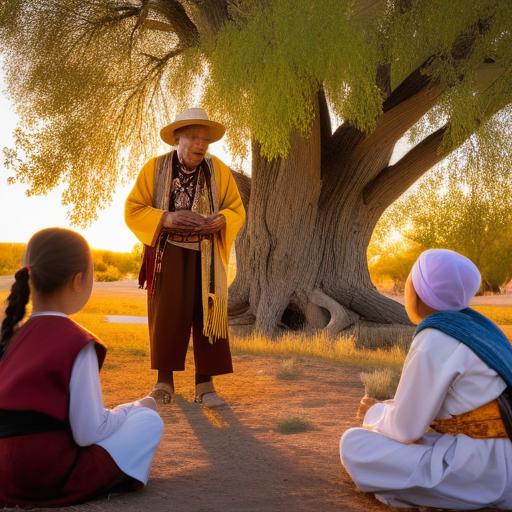
The Ownership of the Story
In the scientific tradition of the West, knowledge is often viewed as a “public good”—something to be categorized, published, and shared universally. But for the indigenous nations of the Great Plains, knowledge is often viewed as a Trust. It is a relationship between a specific community, a specific location, and a specific plant spirit.
As we build digital archives like Spirit Native Foods, we must confront a difficult question: Who owns this data? Is the use of Monarda for heart medicine “public domain” just because a researcher wrote it down in 1910? Or is it the intellectual property of the Lakota people from whom it was learned?
In this 2,100-word analysis, we explore the principles of Indigenous Data Sovereignty (IDS), the history of ethnobotanical extraction, and the ethical protocols that guide this archive’s existence.
1. What is Indigenous Data Sovereignty?
Indigenous Data Sovereignty is the right of a nation to govern the collection, ownership, and application of data about its people, lands, and resources. In the context of ethnobotany, this refers to Traditional Ecological Knowledge (TEK).
The CARE Principles
The global IDS movement has established the CARE Principles for Indigenous Data Governance:
- Collective Benefit: Data ecosystems should be designed and function in ways that enable Indigenous Peoples to derive value from the data.
- Authority to Control: Indigenous Peoples’ rights and interests in their data must be recognized and their authority to control such data be empowered.
- Responsibility: Those working with Indigenous data have a responsibility to share how this data is used with the community of origin.
- Ethics: Indigenous Peoples’ rights and wellbeing should be the primary concern at all stages of the data life cycle.
2. A History of Extraction: The Biopiracy Legacy
To understand why “Respect” is a primary category of our ethics series, we must acknowledge the history of Biopiracy.

The Researcher’s Journal
Throughout the 19th and early 20th centuries, ethnobotanists and anthropologists (such as Melvin Gilmore and Alice Fletcher) traveled across the Great Plains. They recorded thousands of plant uses, ceremonial songs, and harvesting locations. While many of these researchers were motivated by a desire to “save” what they believed was a “vanishing culture,” the act was fundamentally extractive.
- Lack of Consent: Elders often shared knowledge under duress or with the understanding it would stay within the community.
- Credit Theft: Scientific names were attached to plant uses, while the names of the indigenous practitioners were often omitted or relegated to footnotes.
- Commercial Exploitation: Pharmaceutical companies have historically used these ethnographic records to identify “lead compounds” for new drugs, generating billions in revenue while the indigenous communities of origin lived in poverty.
3. The Protocol of Secrecy: Why We Don’t Tell All
One of the most difficult ethical hurdles for a digital archive is the concept of Secret Knowledge. In many Plains cultures, certain medicinal recipes or ceremonial uses are not for the general public. They are “held” by certain societies (like the Medicine Root Society) or passed down within families.
The Archive’s Boundary
At Spirit Native Foods, we follow a strict protocol of “Public Record vs. Community Knowledge.”
- We only publish what is already available in published ethnographic records (Moerman, Kindscher, etc.). We do not publish “insider” information shared in confidence by contemporary practitioners unless explicitly authorized.
- We avoid specific details of ceremonial dosage or ritual “songs” that are intended only for initiates.
- The Goal: To provide a educational resource for general foraging and cultural appreciation without “breaking” the traditional boundaries of sacred knowledge.
4. Geographic Sovereignty: Protecting the Patch
As discussed in our Ethics of the Harvest article, the location of a plant is as important as the plant itself.

The Toxicity of the “Pin”
In the age of social media and GPS-tagging, “Discovery” has become a competitive sport. For a rare plant like Peyote (Lophophora) or Osha (Ligusticum), a single viral post with a location tag can lead to the total stripping of a patch by amateur foragers or commercial poachers.
IDS mandates that geographic data belongs to the local community. By refusing to map specific locations, this archive respects the right of the plants to remain hidden. If you want to find the plant, you must walk the prairie yourself. The “data” we provide is a compass, not a map.
5. Attribution: Re-naming the Knowledge
Respect begins with the name. Whenever possible, we use the indigenous names (Lakota, Cheyenne, Pawnee, Omaha) alongside the scientific and common names.
- The Power of the Name: To name a plant is to declare a relationship. Using Pȟežíȟóta instead of just “White Sage” recognizes the thousand-year lineage of Lakota practitioners who have tended that plant.
- Citing the Source: We make a rigorous effort to attribute uses to specific nations. Instead of saying “Native Americans used X,” we say “The Cheyenne documented the use of X for Y.” This combats the “myth of the monolith” and recognizes the unique intellectual contributions of each nation.
6. The “Digital Divide” and Community Access
An ethical archive must be accessible to the people whose knowledge it contains.
- Reciprocal Access: We aim to ensure that this data is available to tribal schools, community centers, and language revitalization programs.
- Format for Transmission: Data should not just be for researchers; it should be in a format that supports the Oral Tradition. Our Learn section is designed specifically to be “read aloud” and shared, bridging the gap between the screen and the campfire.
7. The Role of the Non-Indigenous Student
Many users of this archive are not indigenous to the High Plains. What is your role in IDS?
- Acknowledge the Debt: Recognize that your health and your food are supported by knowledge that was often taken, not given.
- Support Language: Whenever you use a plant, try to learn its name in the language of the people on whose land you are harvesting.
- Fight for the Land: If you use the knowledge, you must protect the substrate. Supporting tribal land-rights and environmental protection is a direct way to honor the data you are consuming.
8. Conclusion: The Living Archive
Spirit Native Foods is not a museum; it is a collaborative space. We recognize that Traditional Ecological Knowledge is not “static”—it is a living, evolving science. indigenous practitioners today are combining traditional wisdom with modern soil science and climate data to protect the prairie.
By respecting Indigenous Data Sovereignty, we move away from the “extractive” history of ethnobotanical research. We create an archive that is not a shelf of stolen objects, but a library of shared wisdom, guarded by the protocols of respect and dedicated to the health of the Great Plains and all who inhabit them.
Technical Summary: Principles of Respectful Archiving
| Principle | Archive Implementation | Ethical Objective |
|---|---|---|
| Data Sovereignty | Collective Attribution | Recognizes community as the true “author” |
| Limited Specificity | No GPS/Location Mapping | Prevents over-harvesting and commercial poaching |
| The Sacred Boundary | Omission of Ceremonial Detail | Respects traditional protocols of “Secret Knowledge” |
| Language First | indigenous Name priority | Supports cultural and linguistic revitalization |
| Reciprocity | Free Access for Tribal Org | Returns the knowledge to its source |
Recommended Further Reading on IDS
- The Global Indigenous Data Alliance (GIDA): The primary body for IDS policy and the CARE principles.
- “Decolonizing Methodologies” by Linda Tuhiwai Smith: The foundational text on the impact of Western research on indigenous peoples.
- The US Indigenous Data Sovereignty Network (USIDSN): For specific policy and case studies in North America.
View Books and Resources on Indigenous Sovereignty and Ethics on Amazon
Next in our Ethics Series: Tradition - The Passing of the Story.