The Ethics of the Harvest: Beyond Foraging
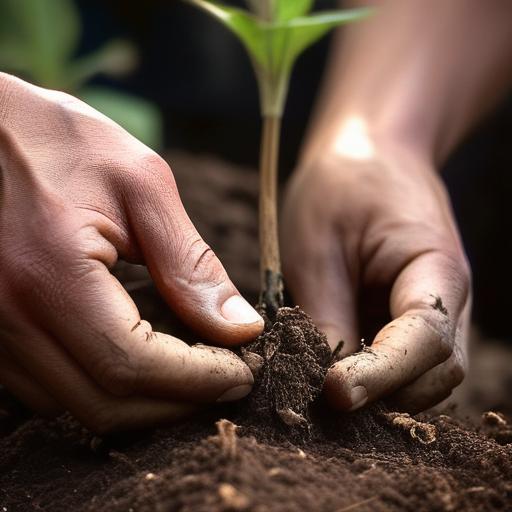
The Crisis of the Extraction Model
In the modern world, the act of taking something from the “wild” is often categorized as foraging. This term, while functional, carries with it a subtle colonial undertone: the idea of the landscape as a “resource” to be exploited by a detached observer. To the Plains Native practitioner, the relationship with the plant world is not one of foraging; it is a relationship of Reciprocity.
As the popularity of wild foods and herbal medicine surges, the Great Plains—one of the most endangered ecosystems on the planet—faces a new threat. It is the threat of “well-meaning extraction.” We see rare species like Echinacea angustifolia being over-harvested by commercial ventures, and secret patches of Sweetgrass being stripped bare. To counter this, we must return to a model of ethics that is deeper than simple sustainability. We must move toward what scholars and elders call the Honorable Harvest.
In this 2,300-word deep dive, we explore the cultural, spiritual, and biological mandates of ethical harvesting on the Great Plains.
1. The Ontology of Kinship: All My Relations
The foundational ethic of Plains Native ethnobotany is contained in the Lakota phrase Mitákuye Oyásʼiŋ—often translated as “All My Relations.” This is not a greeting; it is an ontological statement. It asserts that the plants are not “objects” in the landscape; they are persons. They are our older brothers and sisters, our teachers, and our relatives who have cared for us since the beginning of time.
The Personhood of Plants
If a plant is a person, then the act of harvesting is not an extraction; it is a Negotiation. You would not walk into a relative’s house and take the food off their table without asking; similarly, you do not walk into a meadow of Wild Turnips and begin digging without establishing a relationship. This shift in perspective—from “resource” to “relative”—changes every subsequent decision the harvester makes.
2. The First Rule: Asking Permission
Before a knife touched a stem or a digging stick entered the soil, a traditional practitioner would spend time with the plant patch. This was a period of observation and communication.
The Observation Period
Is the patch healthy? Are there enough young plants to replace the elders? Are the insects and birds still visiting the flowers? If the patch looks stressed—by drought, by fire, or by previous over-harvesting—the answer is already “no.” The harvest is aborted before it begins.
The Offering: The Protocol of the Gift
Once the physical health of the patch is verified, the formal protocol of the gift begins. Among the Plains nations, this almost always involves Tobacco (Čhaŋšáša).

The offering of tobacco is a physical manifestation of a spiritual contract. By placing a small pinch of smoke-plant at the base of the first plant encountered, the harvester is saying: “I am taking your body to sustain mine, and in return, I give you this prayer and this offering of respect.” It is the recognition that life requires the consumption of life, and that this debt must be acknowledged.
Note for the Modern Harvester: If you do not use tobacco, the offering can be any meaningful gesture of reciprocity—water during a drought, or simply the “gift” of removing invasive weeds from the patch. The medium is less important than the intention of the “first gift.”
3. The Second Rule: Never Take the First
In many indigenous traditions, you never harvest the first plant you see. The first plant is the one you speak to; it is the “scout” or the “elder.” You walk past it. You walk past the second, the third, and the fourth. Only when you have walked deep into the patch and confirmed that the population is truly abundant do you begin to select.
This ensures that the “genetic elders”—the plants that were strong enough to catch your eye first—are left to produce seeds. It is a biological strategy disguised as a spiritual protocol.
4. The 2/3rds Rule: The Math of Stewardship
How much can you take? Modern forestry often speaks of “maximum sustainable yield.” Traditional ethics speaks of Restraint.

A common guideline in Plains harvesting is the “One-Third” logic:
- One third for the plants themselves (to ensure seed production).
- One third for the birds and animals who rely on the plant for food and shelter.
- One third for the humans.
If you take more than your third, you are stealing from the future. For rare or slow-growing plants like Peyote or over-collected Sage, the ratio might shift to 1/10th or zero. The goal is to leave the patch in a state where an observer walking by an hour later would not even know you were there.
5. The Ethics of the Digging Stick: Internal Soil Science
The act of harvesting roots—the primary carbohydrate source of the Plains—is inherently disruptive. The Digging Stick (Ičápi) is a tool of intense localized disturbance. However, when used correctly, this disturbance is a form of Tilling.
Aeration and Seed Burial
By prying into the soil to reach a prairie turnip root, the harvester aerates the compacted prairie sod. Furthermore, traditional harvesters were careful to “re-plant” the top of the root (the “crown”) or to vigorously shake the dried seed heads of the harvested plant back into the disturbed soil. The “wound” in the earth becomes a perfect, aerated nursery for the next generation.
This is the definition of a Keystone Species: a harvester who increase the biodiversity and health of the ecosystem through their presence.
6. Indigenous Data Sovereignty: Whose Story is This?
As ethnobotany enters the digital age, a new ethical frontier has emerged: the protection of traditional knowledge.
The Danger of Geographic Specificity
Publishing the exact GPS coordinates of a rare medicinal patch is an act of Environmental Malpractice. In a world of commercial “wild-crafting,” exposing a location can lead to the total annihilation of a population within a single season.
This is why this archive, while rich in botanical data, avoids specific location-mapping. We provide the what and the how, but the where must be earned through your own relationship with your local landscape.
Intellectual Property vs. Sacred Knowledge
Much of the data in this archive is derived from the work of researchers like Moerman, Kindscher, and Gilmore. However, we must acknowledge that this “data” was often extracted from indigenous elders under conditions of power imbalance.
Whenever possible, we highlight the tribal origin of a use. We recognize that the “discovery” of Echinacea’s immune properties was not a scientific breakthrough of the 20th century; it was a thousand-year-old intellectual property of the Plains peoples. Using this knowledge requires a commitment to Attribution and Respect.
7. Toxicity and the Ethics of Safety
There is a dangerous modern myth that “natural” means “safe.” On the Great Plains, this is a lethal assumption. The Water Hemlock (Cicuta) and the Death Camas (Zygadenus) look strikingly similar to edible species.
The Ethics of Accuracy
An ethical harvester has a moral obligation to be an expert in identification. If you are 95% sure of a plant, you are 0% ready to harvest it.
- Misidentification equals Theft: If you harvest the wrong plant and throw it away, you have killed a relative for no purpose.
- Harm to the Archive: If you represent the project poorly by poisoning yourself or others, you damage the reputation of the traditional knowledge you seek to preserve.
8. The Seasonal Cycle: Timing is an Ethic
Harvesting a plant “out of season” is a violation of its biological integrity.
- Picking leaves when the plant is trying to put energy into its flowers stresses its reproductive cycle.
- Digging roots in the peak of summer when the plant is using those sugars to produce seeds reduces the potency of the medicine and the viability of the next generation.
Following the Seasonal Wheel is not just a scheduling convenience; it is a way of synchronizing your biological rhythm with the “breath” of the prairie.
9. Consumption: The Respect of the Table
The ethics of the harvest do not end in the field. They continue into the kitchen and the storage bag.
- No Waste: Every part of the harvested plant should be used. Sliced roots for food, the “scraps” for dye, and the remaining woody stalks for fuel or return to the earth.
- Sharing: In traditional Plains societies, a harvest was rarely for an individual; it was for the lodge or the band. The “prestige” of the harvester was measured by how much they gave away, not how much they kept. This ensured that the elders and the vulnerable were always cared for.
10. Conclusion: Becoming a Relative
The Great Plains are a landscape of ghosts. Billions of bison, millions of acres of tallgrass, and thousands of indigenous villages have been erased by a few centuries of extractive philosophy. We cannot fix this past with more extraction.
The path forward—the path of the true ethnobotanist—is to stop being a “tourist” in the landscape and start being a Relative. This means showing up for the plants when they are not in bloom. It means fighting for the protection of water and soil. It means recognizing that the “Spirit” of Spirit Native Foods is not a marketing term; it is the recognition of an animate, intelligent world that is watching how we behave.
The Honorable Harvest is a practice of love. And in the face of ecological collapse, love—manifested as rigorous, respectful stewardship—is the only technology that matters.
Further Reading and Implementation
To deepen your practice of ethical harvesting, we highly recommend the following resources:
- “Braiding Sweetgrass” by Robin Wall Kimmerer: The definitive modern text on the Honorable Harvest and Reciprocity.
- United Plant Savers (UpS): An organization dedicated to tracking the status of “At-Risk” medicinal plants in North America.
- Local Tribal Councils: Whenever possible, consult with the indigenous nations whose ancestral lands you are walking upon.
View Books and Resources on Foraging Ethics and Stewardship on Amazon
Technical Summary: The Ethical Checklist
| Action | Ethical Mandate | Biological Consequence |
|---|---|---|
| Observation | Ask permission | Prevents harvesting from stressed populations |
| The Offering | Initiate reciprocity | Psychological shift from extraction to gratitude |
| Restraint | Take only 1/3rd | Ensures wildlife survival and seed viability |
| Attribution | Respect TK | Protects indigenous intellectual property |
| Accuracy | 100% ID | Prevents accidental poisoning and wasted life |
| Replanting | The digging stick | Acts as |
| Tilling and Dispersal | Re-planting | Acts as an ecosystem engineer |
Next in our Ethics Series: Safety - Botanical Identification and Toxicity.