Fuel of the Prairie: The Botany of Heat and Light
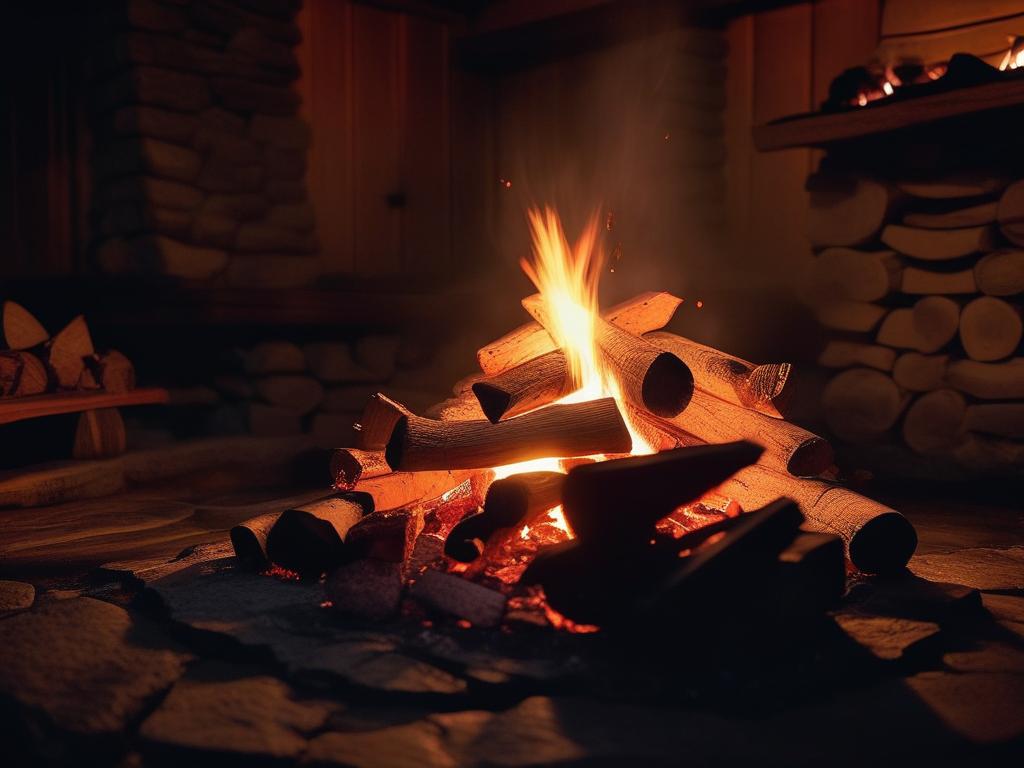
The Heart of the Lodge
On the Great Plains, the fire was more than a utility; it was the biological and spiritual engine of the community. In a landscape where winter temperatures can drop to -40°F and the wind never stops, the management of fuel was a matter of life and death. But “firewood” is not a monolithic category. The ethnobiology of the Plains hearth involved a sophisticated understanding of combustion rates, thermal output (BTUs), and the chemical signatures of different botanical species.
In this 2,000-word deep dive, we explore the science of the prairie flame: from the heavy hardwoods of the river bottoms to the ingenious use of buffalo chips in the wood-scarce shortgrass prairie, and the specialized lighting technologies that illuminated the nights of the High Plains.
1. The Science of Combustion
To the traditional fire-keeper, every wood species had a “personality.” This personality is the result of its chemical and structural composition.
Lignin and Density
The thermal energy of wood is largely governed by its lignin content and its overall density. Hardwoods like Bur Oak (Quercus macrocarpa) have a high density of cellulose and lignin, meaning they contain more “potential energy” by volume. When burned, they provide a slow, steady release of heat and produce long-lasting embers.
Volatile Oils
Softwoods, particularly the Juniper (Red Cedar), contain high concentrations of volatile terpenes and resins. These chemicals serve as “accelerants.” They ignite rapidly and produce a intense, high-temperature flame, but they consume themselves quickly, making them ideal for fire-starting but poor for overnight heating.
2. High-Performance Woods: The Heavy Hitters
I. Bur Oak (Quercus macrocarpa): The Enduring Coal
The Bur Oak is a survivor of the prairie, its thick bark designed to withstand frequent wildfires. For the hearth, it was the gold standard.
- Thermodynamic Profile: High BTU output, low smoke, and exceptional coal-retention.
- Application: Oak was reserved for cold winter nights. A few large oak logs could sustain a slow, radiant heat throughout the night, reducing the need to constantly feed the fire—a critical advantage when wood was scarce.
II. Green Ash (Fraxinus pennsylvanica): The Reliable Flame
Green Ash was often the primary fuel for the Mandan and Hidatsa villages along the Missouri.
- Thermodynamic Profile: Unique among woods, Green Ash has a low moisture content even when “green” (freshly cut). It burns reliably and cleanly with very little “sparking,” making it safe for use inside the lodge where sparks could easily ignite furs or dried grasses.
- Cultural Note: The Ash was often called the “grandmother” of the fire because of its gentle, consistent nature.
III. Juniper/Red Cedar (Juniperus virginiana): The Ritual Spark
The “Red Cedar” was more than fuel; it was medicine.
- Thermodynamic Profile: High-intensity, snap-crackle-pop fire with a fragrant smoke.
- Application: Primarily used for kindling and for ceremonial purification. The high resin content allows it to catch fire even in damp conditions.
3. Specialized Fuels: Engineering the Shortgrass
As one moved west from the river valleys into the shortgrass prairie, wood became increasingly rare. Here, the Plains nations engineered a substitute that was functionally a form of compressed solar power: the Buffalo Chip (Tȟatȟáŋka ičéšpu).
The Chemistry of the Chip
The buffalo chip is a masterpiece of natural processing. The bison consumes the solar energy of the prairie grasses, processes the cellulose through its complex digestive system, and deposits a concentrated puck of fiber. Once sun-dried, the chip is composed of nearly 100% grass fiber, with the nitrogen and moisture removed.
Functional Advantages
- Smokeless Heat: Contrary to modern misconceptions, a dry buffalo chip burns with very little odor and almost no smoke. It produces a clear, steady heat that is ideal for slow-cooking meat.
- Wind Resistance: Because it is dense and lacks the “grain” of wood, a buffalo chip fire is less susceptible to being blown out by the fierce prairie winds.
- Ethic of the Gift: The use of dung as fuel represented the ultimate cycle of sustainability. The grass fed the bison, the bison fed the fire, and the fire-ash returned the minerals to the grass.
4. Fire-Starting: Botanical Friction
Before the arrival of flint-and-steel and eventually matches, fire-starting was a feat of botanical engineering.
The Bow Drill
The bow drill utilized the physics of friction to reach the auto-ignition temperature of wood (approx. 450°F).
- The Spindle: Usually made of a slightly harder wood like dogwood or chokecherry.
- The Hearth Board: Made of a softer, lighter wood with a low ignition point, such as Cottonwood or Linden.
- The Tinder: The most critical component. The “spark” produced by the drill had to be caught in a nest of highly flammable material. The preferred tinder was often the shredded inner bark of the Cottonwood or the dried “fuzz” from the heads of the Red-Tail or Cattail.
The Slow-Match: Carrying the Flame
When a village moved, they often didn’t want to start a new fire from scratch. They used a “slow-match”—a bundle of specific materials that would smolder for hours without going out.
- The Fungus: The Fomes fomentarius (Tinder Hoof Fungus) was highly prized. When processed, the inner “amadou” layer acts like carbon-felt, holding an ember for an entire day of travel.
5. Lighting: Illuminating the Night
Traditional life was not plunged into total darkness after sunset. Instead, specific plants were used to create “portable light.”
The Torch (The Pine Knot)
In the upland areas near the Black Hills or the Rockies, the most common light source was the “pine knot”—the resin-saturated heartwood of a fallen pine tree.
- Engineering: The resin acts as a natural paraffin. A single pine knot can burn for up to an hour with an intense, yellow light that survives even rain.
The Lamp (Fat and Fiber)
Inside the lodge, where large torches were too smoky, small lamps were used.
- The Wick: Made from twisted Indian Hemp fiber or the dried, pithy center of the Rush (Scirpus).
- The Fuel: Buffalo tallow or marrow fat.
- Output: These lamps provided a soft, steady light comparable to a modern candle, sufficient for sewing, beadwork, or storytelling.
6. The Ethics of the Hearth: Foraging vs. Cutting
Among many Plains nations, there was a strong ethical preference for “down-wood”—wood that had already fallen and dried naturally.
The Wood-Gatherer’s Ethic
Cutting a living tree for fuel was often seen as a desperate or disrespectful act. Dead wood was “ready” to be fire; it had given up its moisture and was in a state of transition. Foraging for firewood was a daily activity that required a deep knowledge of the local ecology—knowing which creek had the most drift-wood after a spring flood or which stand of oak had been hit by lightning.
The “Winter Count” of Wood
The availability of wood often dictated the movement of the people. A “winter camp” was chosen specifically for its proximity to sheltered wood stands. A camp that stayed in one place too long would “exhaust the grandmother” (use up the local dead wood), necessitating a move to allow the ecosystem to recover.
7. The Physics of the Lodge Smoke-Hole
The design of the tipi or the move to the earth-lodge involved sophisticated fluid dynamics. The central fire produced a column of hot air that carried the smoke upward. By adjusting the “smoke flaps” on the outside of the tipi, the residents could control the “draw” of the fire, much like the damper on a modern wood stove. A well-tended fire with the correct fuel would generate enough upward velocity to evacuate all smoke while reflecting maximum radiant heat off the lodge walls back onto the people.
8. Modern Ethnobotany: The Sustainable Hearth
Today, as we look for ways to reduce our carbon footprint and reconnect with the land, the lessons of the Plains hearth are more relevant than ever.
- Species Selection: Using “trash wood” like cottonwood for quick summer cooking and “noble woods” like oak for winter heating is a model of efficient energy management.
- Fire as Medicine: The biological impact of gathering around a wood fire—the “campfire effect”—is increasingly recognized by modern psychology as a vital tool for stress reduction and community bonding.
- Returning the Ash: The charcoal and ash from a native wood fire are rich in potassium and minerals. Returning this ash to the soil (or using it in natural dyeing) completes the botanical cycle.
View Traditional Fire-Starting and Outdoor Cooking Gear on Amazon
Technical Summary: The Thermal Efficiency of Plains Fuel
| Fuel Source | Combustion Rate | BTU (Heat) | Primary Benefit |
|---|---|---|---|
| Bur Oak | Slow | Very High | Overnight heating, low smoke |
| Green Ash | Medium | High | Reliable, burns green or dry |
| Red Cedar | Rapid | Medium | Easy ignition, ritual purification |
| Buffalo Chip | Medium-Slow | Medium | Smokeless, abundant in prairie |
| Cottonwood | Rapid | Low | Quick summer fires, light weight |
Next in our Materials Series: Shelter of the Plains: The Botany of the Lodge.