Dyes of the Prairie: The Chemistry of Color
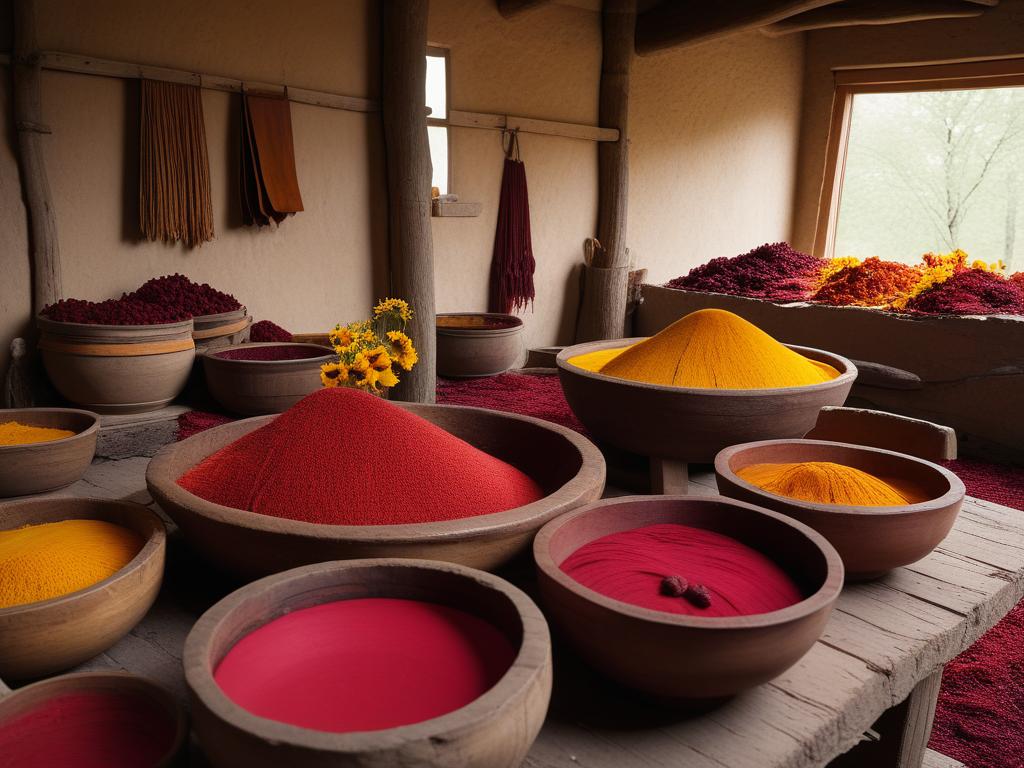
The Vibrant Plains
To the uninitiated eye, the Great Plains can appear as a monolithic sea of brown and green. But to the indigenous practitioners of ethnobotany, the prairie was a high-resolution spectrum of potential color. The ability to extract vibrant, permanent dyes from roots, bark, and flowers was more than an aesthetic pursuit; it was a sophisticated application of organic chemistry.
In Plains Native cultures, color was a language. The specific shade of a quill, the deep black of a bow-string lashing, or the vibrant yellow of a ceremonial robe conveyed information about tribal identity, status, and the spiritual intention of the object. In this 2,000-word analysis, we explore the science of natural pigments, the crucial role of mordants, and the diverse botanical sources of the Plains palette.
1. The Science of Botanical Color
Every color produced by a plant is the result of specific chemical compounds evolved for survival—attracting pollinators, repelling herbivores, or protecting against UV radiation. For the dyer, the challenge is to extract these compounds and “fix” them to a substrate (usually animal hide, porcupine quills, or botanical fiber) so they do not wash away or fade in the sun.
Primary Pigment Classes
- Anthocyanins: Responsible for the reds, purples, and blues in many berries and flowers. While beautiful, they are often “pH sensitive” and can shift color dramatically depending on the acidity of the dye bath.
- Tannins (Polyphenols): Found in high concentrations in oak bark, walnut hulls, and sumac. Tannins are the workhorses of the traditional dyer; they produce deep browns and blacks and often act as their own mordants.
- Carotenoids & Flavonoids: The sources of most yellows and oranges. These compounds are famously stable and light-fast, making yellow one of the most durable colors in the Plains repertoire.
2. The Alchemy of the Mordant
A dye is a pigment that simply “stains” a material; a mordant is a substance that creates a chemical bridge between the pigment molecule and the fiber molecule. Without a mordant, most natural colors are “fugitive”—they will eventually fade and disappear.
Traditional Plains dyers used several types of mordants long before the introduction of commercial “alum”:
- Alkaline Mordants: Wood ash filtrate (lye) was commonly used to shift the pH of a dye bath, often intensifying yellows and helping them bond with protein-based fibers like wool or hide.
- Acidic Mordants: Fermented fruit juices or certain acidic barks were used to “brighten” reds and pinks.
- Mineral Mordants: Iron-rich mud or water from specific “ochre springs” provided the iron required to “sadden” a color, turning a light brown into a deep, permanent black.
- The Tannin-Iron Reaction: This was the most advanced chemical reaction in the Plains toolkit. By boiling a tannin-rich material (like Black Walnut) and then adding iron-rich mud, the dyer created an “iron tannate” complex—the same chemistry used in medieval iron gall ink. This produced a black that was virtually impossible to remove.
3. The Palette: Botanical Sources
Reds and Pinks: The Blood of the Prairie
True red is one of the most difficult colors to achieve in natural dyeing. Unlike the cochineal (insect-based) reds of the Southwest, Plains reds were primarily derived from:
- Sumac (Rhus glabra): The vibrant red berries of the Smooth Sumac contain both red pigments and high concentrations of tannins. When boiled, they produce a range from soft pinks to deep russet reds.
- Bedstraw (Galium spp.): The roots of the Bedstraw plant contain alizarin-like compounds. While the roots are small and laborious to harvest, they produced some of the most vibrant “true” reds found on the Plains.
- Chokecherry (Padus virginiana): While primarily a food source, the fermented juice of the chokecherry was used as a topical stain for wood and bone, producing a deep, wine-red color.
Yellows and Golds: The Sun’s Reflection
Yellow was the most abundant color on the Plains, yet its quality varied wildly by species.
- Rabbitbrush (Ericameria nauseosa): The flowering tops of the Rabbitbrush contain highly concentrated flavonoids. The result is a brilliant, neon-yellow that is incredibly light-fast. To the Navajo and the Ute, this was the primary yellow for wool.
- Sunflower (Helianthus spp.): As documented in our Material & Fiber Plants collection, certain varieties of sunflower provided a soft, buttery yellow from their petals and a deep, greenish-yellow from their seeds.
- Lichen (Parmelia spp.): “Wolf Moss” or certain rock lichens were highly prized. Lichens are unique because they often do not require a mordant (they are “substantive” dyes). They produced a range of “earthy” yellows and ambers that were extremely durable.
Browns and Blacks: The Depth of the Earth
Deep colors were necessary for the “outlining” of artwork and the dyeing of heavy leather gear.
- Black Walnut (Juglans nigra): The hulls (the outer green casing) of the walnut are perhaps the most powerful dye on the continent. Rich in juglone and tannins, even a cold-soak in walnut water will turn hide a rich chocolate brown.
- Alder Bark (Alnus spp.): When fresh, alder bark appears orange, but when boiled as a dye, it produces a range of tan and reddish-brown colors. It was often the preferred dye for “toning” the color of smoke-tanned buckskin.
The Mystery of Blue and Green
True botanical blue is extremely rare on the Great Plains. Most “blue” found in pre-contact artifacts was mineral-based (azurite or copper-rich clays). However, certain practitioners achieved a “muted” blue using:
- Larkspur (Delphinium): The intense blue flowers can produce a temporary blue dye, though it is famously fugitive and prone to fading.
- Over-Dyeing: Most “greens” were achieved by over-dyeing. A material was first dyed yellow (using Rabbitbrush) and then lightly dipped in a weak black or blue solution (mineral or indigo-trade) to achieve various shades of sage and olive.
4. Application Techniques: Beyond the Pot
Natural dyeing wasn’t just about boiling a pot of water. The method of application changed based on the material being colored.
Dyeing Porcupine Quills
Before beads, the porcupine quill was the primary medium for color. Quills are made of keratin (the same protein as hair and fingernails). Because they are naturally oily, they had to be “scoured” in a weak lye solution before they would accept dye. Once cleaned, they were simmered in a highly concentrated dye bath until the color penetrated the hard outer shell.
Painting on Hide
For large-scale items like tipi covers or buffalo robes, immersion dyeing was impractical. Instead, the pigments were ground into a “paint.”
- The Binder: The ground botanical pigment was mixed with a binder, typically a “size” made from boiled hide scrapings (glue) or a mixture of buffalo gall (bile) and fat. This created an emulsion that would adhere to the surface of the leather without cracking.
5. The Cultural Ethnoscience of Color
The preparation of dyes was often a gendered and ritualized activity. Among many Plains tribes, certain colors or dye recipes were “owned” by specific families or societies. To use a pigment without the proper “right” was a violation of social protocol.
This system of knowledge ownership ensured that the “chemistry” was passed down accurately. If a recipe failed, it wasn’t just an aesthetic loss; it was seen as a failure of the practitioner’s relationship with the plant spirit. The “spirit of the red” had to be invited into the pot through prayer and correct preparation.
6. The Impact of the Trade Era
The arrival of commercial “aniline” dyes in the mid-19th century transformed Plains art. These synthetic dyes produced colors (like bright purple and electric blue) that were previously impossible to achieve botanically. However, they lacked the nuanced “harmony” of the natural palette. Objects dyed with the original botanical recipes have a visual “vibration” because they contain a spectrum of related chemical compounds, whereas synthetic dyes are chemically pure and visually “flat.”
7. Modern Reconstruction: The Ethical dyer
Today, there is a powerful movement to return to the natural palette. For the modern ethnobotanist, natural dyeing is a lesson in bioregionalism. Using the sumac and the walnut that grows in your own valley creates a material connection to that specific place that store-bought dye can never replicate.
Practical Tips for the Beginner:
- Stainless Steel vs. Copper: The metal of your pot acts as a mordant! A copper pot will brighten your colors, while an iron pot will “sadden” or darken them.
- Patience is the Best Mordant: The best colors often come from slow, cold-soaking over many days rather than rapid boiling.
- Respect the Quantity: It often takes a 1:1 ratio—one pound of plant material to one pound of fiber—to achieve a deep color. Always harvest ethically and only where the population is abundant.
Browse Natural Dyeing Supplies on Amazon
Technical Summary: The Plains Palette
| Desired Color | Botanical Source | Mordant Needed | Light-Fastness |
|---|---|---|---|
| Golden Yellow | Rabbitbrush Flowers | Alum or Ash | Very High |
| Deep Red | Bedstraw Root | Alum + Acid | High |
| Chocolate Brown | Black Walnut Hulls | None (Substantive) | Exceptional |
| Black | Oak Bark + Iron Mud | Iron | Exceptional |
| Soft Pink | Sumac Berries | Alum | Medium |
Next in our Materials Series: Basketry of the Willow: The Architecture of the Weave.