Basketry of the Willow: The Architecture of the Weave
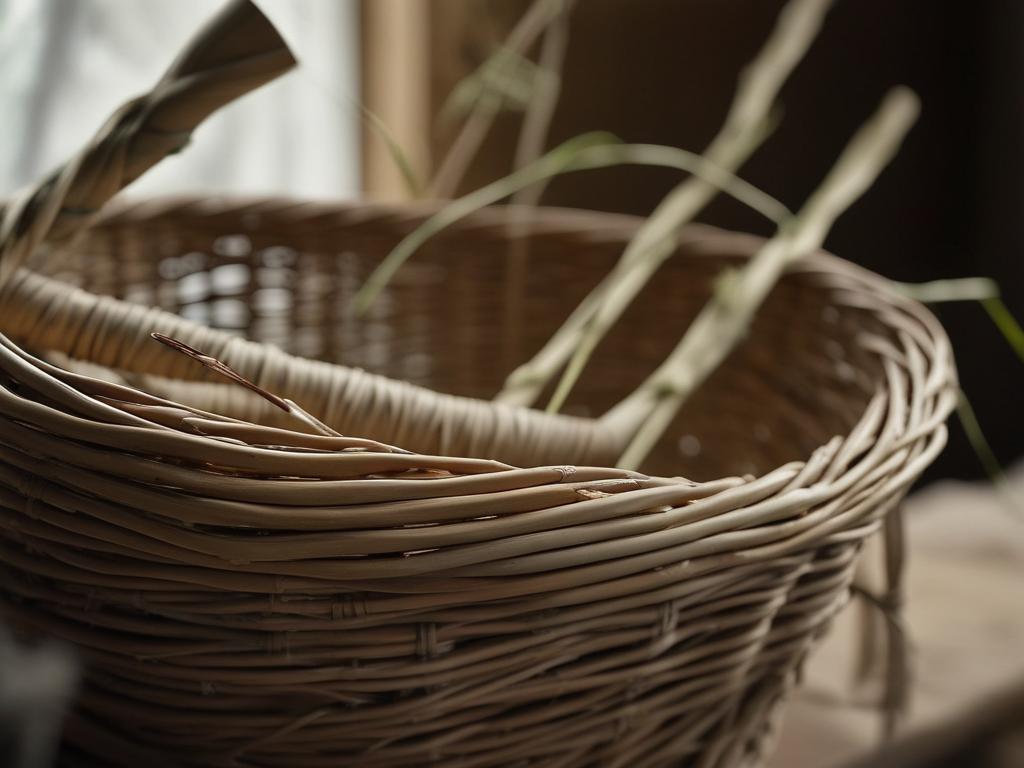
The Woven World
In the expansive landscape of the Great Plains, architecture was not limited to the lodge or the tipi. It existed in the hands of the weaver. Every basket, tray, and weir was a masterpiece of structural engineering, designed to perform a specific function under the stresses of weight, moisture, and constant travel. While many people associate basketry with more sedentary forest tribes, the Plains nations—including the Mandan, Hidatsa, Arikara, and even the nomadic Lakota—maintained a sophisticated, bioregional weaving tradition centered on one primary material: the Willow.
In this 2,000-word deep dive, we explore why willow was the preferred material of the Plains, the complex seasonal cycles of harvest, and the mechanical principles of the three primary weaving styles used to conquer the challenges of life on the prairie.
1. The Engineering of Willow: Why Salix?
The willow (Salix spp.) is a botanical marvel. Found along every creek and river bottom from the Missouri to the Rockies, it provided an abundant, renewable, and high-performance material. But its selection for basketry was not just a matter of availability; it was a choice driven by material science.
Flexibility and Pectin
What makes willow unique is the ratio of flexibility to tensile strength. Young willow shoots are incredibly pliable due to their high moisture content and a specific concentration of pectins in their bark. This allowed weavers to create tight, acute bends without snapping the fibers. When dried, these same shoots undergo a chemical transition: the pectins harden, and the cellulose fibers lock into place, creating a rigid, lightweight structure that is remarkably resilient to impact.
The Self-Healing Rod
Willow rods also possess a “memory.” If a basket is crushed during transport, the willow can often be re-hydrated (steamed) and “massaged” back into its original shape. This durability was essential for nomadic groups who had to pack their entire lives onto horses or travois every few weeks.
2. Harvesting and Seasonality: The Weaver’s Calendar
A basket begins months before the first weave. The quality of the finished vessel is determined entirely by the conditions of the harvest.
The “Spring Peeling”
In the early spring, when the sap begins to run (Wihákata-pȟí – the time of the willow sap), the bark is loose and can be easily stripped away. This produces “white willow”—the smooth, ivory rods used for decorative and fine-weave baskets. Spring-harvested willow is prized for its smoothness, but because it is harvested during a period of active growth, it can be more prone to shrinkage as it dries.
The “Winter Rod”
Winter-harvested willow (harvested during dormancy) is stripped of its bark through a more laborious process of boiling or steaming. However, winter willow is denser and has a higher concentration of lignins, making it the preferred choice for heavy-duty burden baskets and fish weirs.
The Ethical Harvest
Traditional weavers did not simply cut any willow they found. They “tended” to the willow stands through a process similar to modern coppicing. By cutting the willow back to the ground every few years, they encouraged the plant to send up long, straight, unbranched “suckers”—the perfect material for weaving. This symbiotic relationship ensured a constant supply of high-grade rods while stimulating the health of the riparian habitat.
3. The Three Architectures of the Weave
Plains basketry utilized three primary mechanical systems, each chosen for its specific load-bearing properties.
I. Coiling: The Pressure Vessel
Coiling is technically a sewing technique rather than a true weave. A “foundation” (a bundle of willow shoots or grass) is spiraled upward and “stitched” to the row below using a flexible “splint” (a split piece of willow or pine root).
- Mechanical Advantage: Coiled baskets are extremely thick and structurally stable. Because the foundation is continuous, there is no single point of failure.
- Application: Coiling was the preferred method for large-scale storage containers and, in some cases, “water-tight” baskets. By using a very fine stitch and allowing the willow to swell when wet, weavers created vessels capable of holding liquid.
II. Twining: The Flexible Mesh
Twining involves two or more “weft” strands (the horizontal pieces) twisting around the “warp” strands (the vertical pieces).
- Mechanical Advantage: Twining is the most flexible of the weaves. It allows for “openwork”—gaps in the weave that reduce weight and allow for drainage.
- Application: This was the primary architecture for fishing nets, seed beaters, and burden baskets. The twisting of the weft strands locks each warp strand into place, ensuring that even if one strand breaks, the entire basket does not unravel.
III. Wicker: The Rapid Frame
Wicker is the simplest weave: a single weft strand passes over and under the warp strands.
- Mechanical Advantage: Speed. Wicker can be produced very quickly.
- Application: Temporary containers, large-scale lodge structures, and the “beating trays” used during the rapid harvest of wild rice or sunflower seeds.
4. Specialized Designs for the High Plains
The Seed Beater: A Lesson in Impact Resistance
Perhaps the most specialized tool in the Plains toolkit was the Seed Beater. Used to strike the heads of grasses and sunflowers, it had to be incredibly light to prevent fatigue, yet strong enough to withstand thousands of high-velocity impacts. Traditional seed beaters were twined from “green” willow, which provided a natural shock-absorption. The bowl-shaped design was engineered to “catch” the vibration and redirect it into the seeds, causing them to fall into the tray rather than scattering.
The Burden Basket: Distribution of Load
For the women who traveled miles to harvest roots or berries, the burden basket was their primary engine. These were often conical in shape (pointed at the bottom).
- The Cone Logic: A conical basket distributes the weight of the load directly down the center of the weaver’s back when carried with a “tumpline” (a head strap). This allowed a single harvester to carry up to 60 pounds of roots with minimal strain on the shoulders.
The Fish Weir: Hydraulic Engineering
Along the Missouri River, the Hidatsa and Mandan built massive willow weirs—wicker-woven fences placed across the current. These structures had to withstand the hydraulic pressure of a moving river. Weavers used a “cross-hatching” technique, reinforcing the willow with heavy stones and lashings of Indian Hemp cordage.
5. Material Synergy: Sumac and Pine Root
While willow was the foundation, a master weaver used a variety of “additive” materials to enhance the basket’s performance.
- Pine Root (Wází-utȟuŋ́): For the “stitching” of coiled baskets, many weavers preferred the roots of the Ponderosa Pine. These roots are incredibly long and have a higher resin content than willow, making them more resistant to rot in damp environments.
- Smooth Sumac: The split stems of the sumac provided a natural contrast in color (yellow vs. white willow) and were often used to weave the “rim” of a basket, as sumac is less prone to splitting when bent in a tight circle.
6. The Physics of the Basket: Why They Last
Archaeological finds on the Plains have uncovered willow basketry fragments that are over 1,000 years old. How can a plant fiber last this long?
The secret lies in the dynamic tension of the weave. In a well-made basket, no part of the structure is “static.” Every rod is under a slight state of stress, pushing against its neighbor. This internal pressure creates a “unity of form.” Like a modern suspension bridge, the basket doesn’t just “hold” weight; it distributes it across the entire woven surface. This prevents any single point from reaching its breaking limit.
7. The Cultural Vessel: More than a Container
In many Plains cultures, the basket was a metaphor for the womb, the lodge, and the earth itself. The process of weaving was often accompanied by songs that followed the rhythm of the pass-through.
A “broken weave” or a “dropped stitch” was seen as a bad omen for the harvester. This high standard of craftsmanship ensured that only the safest and most efficient tools were taken into the field. The basket was not a disposable item; it was a companion that was repaired, patched, and eventually “returned” to the soil when its service was over.
8. Modern Revitalization: The New Wave
Today, a new generation of indigenous weavers and ethnobotanists are returning to the riverbanks. As they learn to peel the willow and “think” in twining patterns, they are recovering more than just a craft. They are recovering a way of seeing the world as interconnected.
Every willow basket is a map of a river. It tells you where the water was clean, how the winter was for the trees, and how much patience the weaver possessed. In an age of plastic disposability, the willow basket remains a testament to the power of the “living weave.”
Recommended Tools for the Modern Weaver
If you are looking to start your own willow weaving journey, we recommend several specialized tools to ensure a clean, professional finish:
- Stainless Steel Secateurs: For non-crush cutting of willow rods.
- A Bone or Hardwood Awl: Essential for opening the weave in coiled basketry without tearing the fibers.
- A Stripping Tool (Shaving Horse): For removing bark from winter-harvested willow.
View Specialized Basketry and Woodworking Tools on Amazon
Technical Summary: Weaving Systems
| Weaving Style | Material | Best Substrate | Strength Profile |
|---|---|---|---|
| Coiling | Willow + Pine Root | Storage, Liquids | Very High (Rigid) |
| Twining | Willow + Hemp | Burden, Nets | High (Flexible) |
| Wicker | Raw Willow Rods | Weirs, Trays | Medium (Rapid) |
| Plaiting | Flat Splints | Mats, Flat Pouches | High (Planar) |
Next in our Materials Series: Fuel of the Prairie: The Botany of Heat and Light.