The Sovereignty of the Plate: Traditional Food Systems
The High-Performance Kitchen of the High Plains
In the modern world, “fast food” is a term synonymous with poor health and industrial processing. But for the nomadic and semi-sedentary nations of the Great Plains, “fast food”—meals that could be prepared in seconds and carried for thousands of miles—was the pinnacle of human health and engineering. To survive a week-long journey through a blizzard or to power a hunter through a fifty-mile chase, the food had to be more than just edible; it had to be a Caloric Payload.
Indigenous food systems were built on a foundation of Sovereignty. This wasn’t just political sovereignty, but biological sovereignty—the ability to feed one’s family and nation indefinitely without reliance on external supply chains. At the heart of this system were two legendary technologies: Pemmican and its variations, like the Lakota Wasna.
In this 2,200-word deep dive, we explore the material science of indigenous food preservation, the mathematics of the caloric payload, and the cultural philosophy of the “Living Plate.”
1. The Thermodynamics of Pemmican
Pemmican is often cited as the first “survival food.” But to call it survival food is to underestimate its sophistication. Pemmican is functionally a Shelf-Stable Lipid-Protein Complex.
The Composition
- Lean Protein: Bison meat, dried until it is brittle (“jerky”) and then pounded into a fine, fibrous powder. Drying removes the moisture, which is the primary vector for bacterial growth.
- Rendered Tallow: High-quality fat, typically from the “back-fat” or “kidney-fat” of the bison. Rendered fat acts as a biological sealant, excluding oxygen and moisture from the protein fibers.
- Acidic Berry Concentrate: Chokecherries, Buffalo Berries, or Serviceberries, dried and ground (including the pits).
The Math of Energy
Fat contains 9 calories per gram, while protein and carbohydrates contain 4. By maximizing the fat-to-protein ratio, Plains engineers created a food that provided the maximum possible energy for the minimum possible weight. A single one-pound block of high-grade pemmican could provide nearly 3,500 calories—enough to power a grown man through a day of extreme physical labor in the cold.
2. Wasna: The Lakota “Everything”
While the term “Pemmican” is Cree in origin (pimîhkân), the Lakota variation—Wasna—represents a specific cultural and nutritional refinement. In Lakota, Wa-sná literally means “all ground up.”

The Role of the Pit
Unlike some northern pemmicans that used whole berries, Wasna utilized chokecherries ground with their pits.
- The Chemistry of the Pit: Chokecherry pits contain small amounts of amygdalin (which converts to cyanide), but traditional processing (drying and grinding) renders them safe and adds a distinctively nutty “almond” flavor and a boost of healthy oils.
- Mineral Density: The grinding of the pits and the inclusion of marrow-grease meant that Wasna was not just an energy bar; it was a multi-vitamin, providing calcium, iron, and essential fatty acids that kept the people healthy during the long winters when fresh greens were unavailable.
3. Preservation Science: Beyond the Fridge
How did these foods last for years without refrigeration? The answer lies in Water Activity (Aw) control and pH management.
Moisture Removal
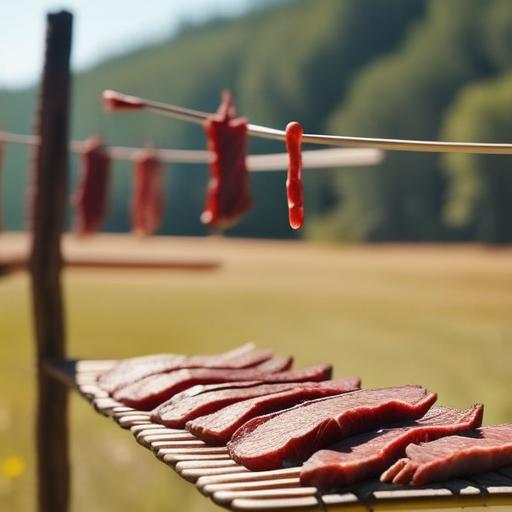
Free water is the enemy of preservation. By drying meat on flat racks in the high-elevation prairie wind (a process called “wind-curing”), the moisture content is reduced to below 15%. At this level, bacteria and mold cannot reproduce.
The Sealant Principle
In traditional Wasna preparation, the pounded meat and berries are placed in a rawhide bag. Boiling-hot tallow is poured over the mixture, seeping into every crevice. As it cools, it creates an airtight seal. This prevents lipid oxidation (rancidity) and creates an anaerobic environment.
The Rawhide Parfleche: The Indigenous Cellar
The Parfleche was more than a suitcase; it was a climate-controlled storage unit.

The thick rawhide provided:
- Physical Protection: Shielding the food from pests and crushing.
- UV Protection: Light accelerates the degradation of fats; the opaque leather kept the food in total darkness.
- Breathability: While airtight when sealed with fat, the leather allowed for minute cycles of humidity exchange, preventing the “sweating” that often ruins plastic-bagged food today.
4. The Starch Economy: Roots and Drying
While the bison provided the energy, the Plants provided the “slow-burn” carbohydrates and flavor.
The Drying Rack Protocol
Just as meat was wind-cured, so too were the wild roots. The Breadroot (Psoralea esculenta) was braided and hung from the lodge rafters. This “hanging storage” utilized the natural convection of the lodge, keeping the roots dry and away from rodents.
- Rehydration: When needed, these rock-hard dried roots were pounded into flour or thrown directly into stews, where they acted as a natural thickener (due to their high starch content), creating a comforting, calorie-dense “pudding” (Wigmúŋke).
5. The “First Food” Philosophy: Breast Milk and Wasna
In many Plains cultures, Wasna was considered a “Sacred Food,” often used in the first feedings of children transitioning from breast milk.
- Why?: Breast milk is high in fat and protein; Wasna provided a familiar nutritional profile that was easy for the developing digestive system to handle.
- The Medicine of the Meal: Food was never “just fuel.” It was the physical manifestation of the buffalo’s life-force. To eat Wasna was to literally ingest the spirit of the prairie.
6. Seasonality and the Storage Cache
As discussed in our Seasonal Practice guide, the “Harvest Season” was followed by the “Cache Season.”
The Underground Granary
To prevent theft (by rival bands or animals) and to protect food from the extreme surface temperatures, many nations used Storage Caches—deep, bell-shaped pits dug into the earth.
- Construction: The walls were lined with dry grass and bark. The food (Wasna, dried corn, dried roots) was packed tightly and covered with more grass, a hide, and finally a layer of earth that was camouflaged to match the surrounding prairie.
- Geothermal Insulation: These caches acted like modern “root cellars,” maintaining a constant 50-degree temperature year-round.
7. The Impact of the Reservation Era
The systematic destruction of the bison herds was a deliberate strike against Food Sovereignty. By removing the source of Pemmican and Wasna, the colonial government made the Plains nations dependent on “Commodity Foods”—white flour, refined sugar, and lard.
- The Health Crisis: The shift from the high-protein, nutrient-dense traditional diet to one of high-carbohydrate, nutrient-poor commodities led to the modern epidemics of diabetes and heart disease in Indian Country.
- The Resistance: Today, the movement for “Food Sovereignty” is a direct return to these traditional systems. Reintroducing bison herds and wild-root harvesting is not just a cultural act; it is a life-saving medical intervention.
8. Conclusion: The Sovereign Plate
Every time someone today makes a batch of Wasna or chooses to dry a Juneberry instead of letting it rot, they are participating in an ancient and brilliant technological tradition. The “Plate” of the Great Plains was a system of deep ecological knowledge, sophisticated chemistry, and profound respect for the animal and plant world.
Food is the first medicine. By reclaiming our traditional foodways, we reclaim our health, our history, and our future.
Technical Summary: Nutritional Profiles of Plains Foods
| Food Item | Primary Benefit | Shelf Life (Properly Stored) | Modern Replacement |
|---|---|---|---|
| Wasna / Pemmican | Concentrated Kcal (3.5k/lb) | 2–5 Years | Energy Bars (Inferior) |
| Dried Breadroot | Complex Carbohydrate | 5+ Years | Potato Starch |
| Dried Berries | Vitamin C, Antioxidants | 1–2 Years | Raisins / Goji Berries |
| Marrow Grease | Bio-available Minerals | 1 Year | Fish Oil Supplements |
| Dried Meat (Jerky) | Lightweight Protein | 1 Year | Commercial Jerky (High Sodium) |
Recommended Tools for Traditional Food Processing
- Granite or Basalt Mortar & Pestle: For the traditional pounding of meat and pits.
- Solar Dehydrator: A modern adaptation of the traditional “wind-curing” rack.
- Vacuum Sealer: While we love rawhide, a vacuum sealer is a modern way to achieve the same anaerobic seal as tallow for long-term storage.
View Traditional and Modern Food Preservation Tools on Amazon
Next in our Foodways Series: Roots of Resilience - The Starch Economy.