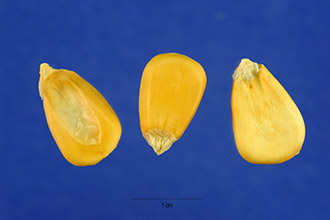
corn
Zea mays L.
Traditional Food Use
Used as food Additional commentary: Generations after leaving what would become Minnesota, and their agricultural life there, the Cheyenne continued to grow corn when it seemed economical. The Cheyenne of the plains depended mostly on buffalo for their nutrition, but making the shift onto the plains was a process not an event. Raising crops was phased out as it became difficult on the tribe for the women to remain in a settled camp, with some men there as defense, and a smaller band of hunters seeking buffalo and bringing the kill back to camp. However, the allure of corn must have been strong as reports indicate farming as late as 1865. Correlated with the continued use of corn is the continued veneration of it. In the Massaum ceremony, five grains of corn were placed in respect to the four cardinal directions and the earth’s center at the foot of each lodge pole, and the center pole. The people could eat only after the spirits had eaten. Prior to 1876, the Corn Dance was practiced and the Cheyenne kept sacred ears of corn grown from the original seeds that Esceheman gave them. Esceheman gave those original ears of corn to Erect Horns and Sweet Medicine, whose other names refer to this (Standing on the Ground, Red Tassel, Sweet Root Standing, and Rustling Corn Leaf). Hart contends that combining these men’s role in bringing corn to the Cheyenne with their role in teaching the Cheyenne how to hunt maintains the tribe’s identity with their older ways. In capturing eagles, a practice that continued into the first half of the nineteenth century, the Cheyenne would prepare a ceremonial meal consisting in part of pulverized corn. This food brought blessings and success.744
Food crop
Valued as a fodder for livestock.
Ceremonial & Cultural Notes
Shucks used in the peyote ceremony.
Botanical Reference
Parts Documented: Corn ears, ears