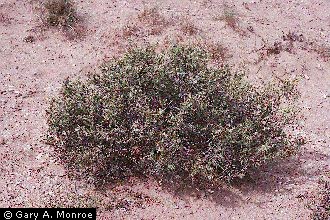
greasewood
Sarcobatus vermiculatus (Hook.) Torr. var. baileyi (Coville) Jeps.
Medicinal Documentation
Greasewood sticks were used in a sort of acupuncture in which certain parts of the body were pierced. Specialists can only perform the ceremony.
Greasewood sticks would draw out bad blood when a person’s system was afflicted with it.
Greasewood was also used to treat a horse’s sprained or bruised leg. There was a ceremony held for all horses in any kind of trouble, and after performing this, holes were punched in the horse’s shoulder with a greasewood stick and the healer would blow into them, causing the shoulder to swell. If the horse got up and shook itself, it would be all right.
Ceremonial & Cultural Notes
Artifacts/Material use: Small sticks wrapped with buffalo hair and used as a tamper for tobacco pipes
Artifacts/Material use: Used to make pipe stems
As a tool involved in ceremonies, greasewood sticks would hold Sun Dancers’ whistles when not in use, and serve as a tamper for tobacco pipes.
Botanical Reference
Parts Documented: Not specified in the literature, small_sticks