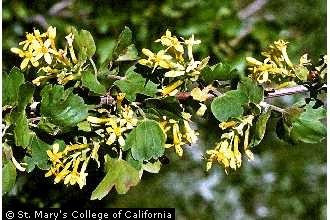
golden currant
Ribes aureum Pursh
Traditional Food Use
Berries eaten fresh or dried.
Berries eaten fresh or stored for winter use
Pounded, dried berries formed into cakes for winter use Additional commentary: Also used to manufacture pemmican by combining dried buffalo meat, with dried berries, with rendered fat.606
Berries used for food
Eaten for food.
Medicinal Documentation
the inner bark is used to treat swellings wičhágnaška | Crow: Tea of bark and roots used for cramps.
Ceremonial & Cultural Notes
Some are collected and eaten raw. Other berries are mashed, formed into small cakes, sun-dried, and stored for winter use. The cakes would be boiled with deer fat.128
Botanical Reference
Parts Documented: bark, fruit_or_berry, Fruit, berries
Distribution: Native Plains species; documented Crow use; Well-drained, often along streams; plains to foothills; Alberta, Canada to New Mexico