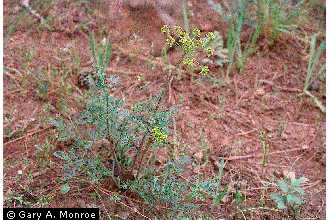
fernleaf biscuitroot
Lomatium dissectum (Nutt.) Mathias & Constance
Traditional Food Use
The root is edible, but has a desert biscuitroot, tȟathíŋpsila huzízi, strong flavor that is diminished through roasting. After roasting, it is Lomatium wild parsley, waȟčá zí sometimes ground into flour to make breads or to thicken soups and
Long, young shoots are cooked for greens. | Root is boiled into a tea.
Medicinal Documentation
At Wind River, the plant was used to make a “scent” for a sick person, a tea from the root for colds and flu, or the steam from the boiled root would be inhaled by the patient. Water from the boiled root would also be sponged on a sick 167 person or the dry root is pounded and grease is added to massage the affected parts of a person’s body.
Poultice of root pulp applied to wounds and bruises | Ute: Roots burned in a pan and held beneath the horse's nose for distemper
Ceremonial & Cultural Notes
Commentary: Harm’s Peak, Colorado is named Nii’eetei, tiikou’uni’i or “Where white turnips are gathered.” White turnips also are a traditional medicinal plant.142
Artifacts: Dried root chips diluted with Bull Durham were also used during the 1930-1945 era at Wind River for a “friendly” smoke. Commentary: Leptotaenia multifida is not a currently accepted synonym. Today the plant is classified under Lomatium dissectum var. multifidum (Nutt.) Mathias & Constance.
Botanical Reference
Parts Documented: root, Roots, Shoots