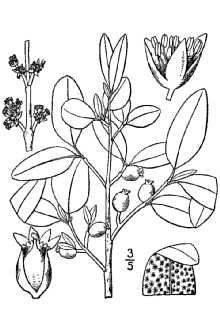
russet buffaloberry
Lepargyrea canadensis (L.) Greene
Traditional Food Use
Berries dried for winter use
Whipped into froth and used as a dessert
Fruit used to make excellent preserves
Berries gathered in quantities and used throughout the winter Additional commentary: Women spread hides underneath the trees and the berries were beaten off with digging sticks or clubs. Harvesting always took place after fall’s first hard frost as the berries were not sweet until that time. The berries are a favorite food of porcupines and magpies often nested in the shrub as its thorns protected the nest and nestlings.675
Ceremonial & Cultural Notes
Buffaloberry contains a bitter substance (saponin) that makes a foamy substance when beaten like egg-whites. If too much saponin is consumed it can cause diarrhea, vomiting and stomach cramps.147
Botanical Reference
Parts Documented: Fruit
Distribution: Open woods and stream banks; foothills to sub-alpine; Alaska to New Mexico