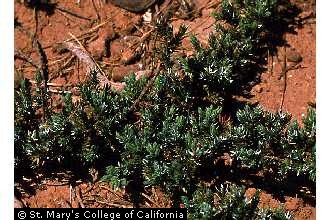
common juniper
Juniperus communis L.
Medicinal Documentation
Cones chewed, infusion of boughs or cones taken or used as steam bath for colds
Infusion of boughs or fleshy cones taken for coughing
Infusion of boughs or fleshy cones taken for high fevers
Leaves burned at childbirth to promote delivery
Boughs or fleshy cones taken as a sedative
Infusion of boughs or cones taken for tickles in the throat or tonsillitis
Used as cough medicine
Infusion of leaves used for a tickling in the throat Additional commentary: If the cough was persistent the patient would chew on or two berries and swallow the juice
Ground needles are burned as a disinfectant | Infusion of needles as a tea taken for bowel troubles | Ground needles scent used to drive smallpox away
Ceremonial & Cultural Notes
Wood flutes used to "charm a girl whom a man loved to make her love him."
Leaves burned as incense in ceremonies, especially to remove fear of thunder Additional commentary: Juniperus communis L. (common juniper) also Juniperus siberica Burgsd. Are used in a similar manner.366
Use as a smudge to purify the home during a person’s illness
Spiritual/Religious: The name, Ce:h’e’, specifically is used for the needles that are used ceremonially, separate from the plant for cedaring or smudging Commentary: The phrase, “I am cedaring,” is a rough translation provided by Dr. Stephen Greymorning.115 The term for the plant is Be’Oeino’o or “Red- Inside.” The term also applies to Sabina scopulorum.116 | Commentary: The phrase, “I am cedaring,” is a rough translation provided by Dr. Stephen Greymorning. The term for the plant is Be’Oeino’o or “Red- Inside.” The term also applies to Sabina scopulorum.118 | Commentary: The phrase, “I am cedaring,” is a rough translation provided by Dr. Stephen Greymorning.120 The term for the plant is Be’Oeino’o or “Red- Inside.” The term also applies to Sabina scopulorum.121 | Commentary: The ground needles are sprinkled over a fire or hot stove. The phrase, “I am cedaring,” is a translation provided by Dr. Stephen Greymorning.123 The term for the plant is Be’Oeino’o or “Red-Inside.” The term also applies to Sabina scopulorum.124 | Artifacts: Needles ground and used for their scent in a variety of contexts Commentary: The term for the plant is Be’Oeino’o or “Red-Inside.” The term also applies to Sabina scopulorum.126 | Commentary: Hayden identifies Sath-i-win as “little pine berries with a species of trailing juniper, possibly Juniperus horizontalis that occurs in northern Wyoming. The term for the plant is Be’Oeino’o or “Red-Inside.” The term also applies to Sabina scopulorum.128
Botanical Reference
Parts Documented: boughs_or_cones, boughs_or_fleshy_cones, cones, leaves, wood, Berries, Needles
Distribution: Prairie hillsides, fields, and occasionally woodland areas; dry open sites or open forest; plains to alpine; Alaska to New Mexico