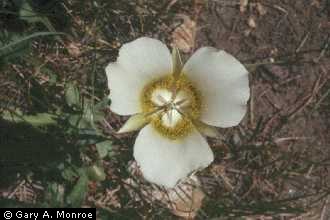
Gunnison's mariposa lily
Calochortus gunnisonii S. Watson
Traditional Food Use
Dried bulbs pounded fine and meal boiled into a sweet porridge or mush or for unspecified food
Young bulbs cooked fresh and used for food
Dried bulbs stored for winter use as food
Young buds used for food.
Species used for food
Medicinal Documentation
used to treat breast cancer The bulbs are eaten raw, boiled or roasted. The bulbs are also macerated and combined with other plants to create a poultice that is
Dried, chopped bulbs used as an ingredient for a medicinal mixture Additional commentary: The bulbs of this plant were cut up, dried, and used in a medicinal mixture. Sometimes, a piece of the root would be put in the mouth of a horse before running the animal in a race.181
Root put into a horse's mouth before running the animal in a race
Ceremonial & Cultural Notes
Commentary: Currently the Arapaho word is not recognized.51
Botanical Reference
Parts Documented: root, Not specified in the literature 137, bulbs, dried_bulbs, plant, young_buds, young_bulbs
Distribution: Dry prairies and open, often rocky coniferous and deciduous forests. Found predominantly in the northwest prairie bio-region; Montana to New Mexico