Traditional Root Harvesting: The Prairie's Underground Stores
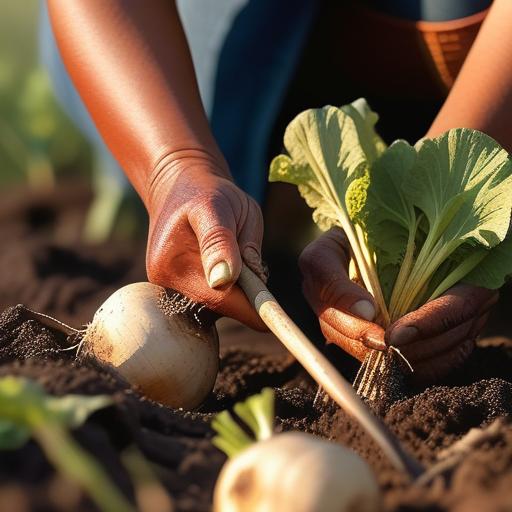
The Bread of the Plains
If the bison was the meat of the plains nations, the Prairie Turnip (Psoralea esculenta, also known as Timpsila in Lakota) was their bread. For the indigenous peoples of the Great Plains, root crops provided the essential carbohydrate base of their diet, offering a stable and reliable source of energy that could be harvested in abundance and stored for years.
In this exploration, we delve into the technical and cultural aspects of traditional root harvesting, focusing on the two most significant species: the Prairie Turnip and the Bitterroot.
The Prairie Turnip (Psoralea esculenta)
Found throughout the high plains from Saskatchewan to Texas, the Prairie Turnip is a hardy legume with a thick, starchy root. Its importance cannot be overstated; it was the primary vegetable staple for tens of thousands of people for millenia.
The Harvest Window
The harvest of Timpsila is a lesson in botanical timing. The plant is easiest to find when it is in bloom, usually in June or early July. Once the seeds ripen, the stem becomes brittle and breaks off, causing the plant to tumble across the prairie like a small tumbleweed. If the gatherer waits too long, the location of the root is lost.
Traditionally, this was a communal activity, often led by women. Groups would move across the prairie with digging sticks—historically made of hardened ash or chokecherry wood—searching for the distinctive blue-violet flowers.
Processing and Storage
The processing of the Prairie Turnip is as important as the harvest. Once dug, the tough, dark outer skin is peeled away, revealing the white, starchy interior. These roots can be eaten fresh, but the majority were prepared for long-term storage.
- Drying: The peeled roots were often braided together by their long, taproot-like ends into strings several feet long. These braids were then hung outside the lodges to dry in the sun and wind.
- Grinding: Once stone-hard and dry, the roots could be pounded into a fine flour. This flour was used to thicken soups, mixed with berries to make puddings, or combined with tallow to make a type of travel cake.
- Whole Storage: The dried roots could also be stored whole. When needed, they were soaked in water for several hours until they regained their soft, potato-like consistency.
The Bitterroot (Lewisia rediviva)
To the west, on the margins of the plains and in the mountain valleys, the Bitterroot reigned supreme. The Salish, Flathead, and Nez Perce nations, among others, considered it a sacred and essential resource.
The First Root Ceremony
The harvest of Bitterroot was almost always preceded by a “First Root Ceremony.” The community would wait until the first plants were ready, and a designated elder (often a woman) would harvest the first few roots. Only after these were ceremonially acknowledged and shared could the general harvest begin. This practice reinforced the community’s connection to the land and ensured that the harvest began at the optimal time.
The Bitterness of Life
As the name implies, the root is intensely bitter when harvested late in the season. The ideal time for harvest is just as the first pink petals begin to show, but before the plant fully blooms. At this stage, the outer skin can be easily slipped off, which significantly reduces the bitterness.
Bitterroot was almost always dried for storage. Because of its intense flavor and high nutritional density, only a small amount was needed to flavor a large pot of soup or stew.
Other Notable Roots
While the Prairie Turnip and Bitterroot were the stars, many other roots played supporting roles:
- Wild Onion (Allium spp.): Used primarily as a seasoning and for its vitamin content in early spring.
- Balsamroot (Balsamorhiza sagittata): The thick, woody roots were slow-roasted in earthen pits for several days until they became sweet and edible.
- Camas (Camassia quamash): Though more common in the plateau region, it was traded extensively onto the plains. Like Balsamroot, it required long-term pit roasting to convert its complex starches into digestible sugars.
Conclusion: The Underground Legacy
The traditional knowledge of root harvesting is a testament to the deep observational skills of indigenous peoples. They knew not just where to look, but exactly when to strike. Today, as we face increasing food insecurity and a narrowing of our dietary diversity, the legacy of the prairie’s underground stores offers a profound reminder of the abundance that exists when we live in harmony with the natural cycles of the earth.
In our next article, we will move from the earth to the branches, exploring the Berries and Fruits of the Great Plains.