Storage & Caches: Defeating Time
The Battle Against Decay
The Final step in any botanical preparation is Storage. A perfectly dried plant or a meticulously pounded berry cake can be ruined in a single night by a damp floor or a hungry rodent. The storage technologies of the Plains were exercises in material engineering and strategic planning.
The Parfleche: The Hard-Shell Suitcase
The most critical storage container was the Parfleche. Made from the rawhide of a buffalo, these containers were processed until they were as stiff as modern plastic but remained slightly breathable.
- Design: They were folded like envelopes and tied with leather thongs.
- Protection: The toughness of the rawhide was a formidable barrier against rodents. When painted with traditional pigments, the surface also resisted moisture.
- Portability: Parfleche were designed to be lashed to a travois or horse, ensuring that the family’s “pharmacy” and “pantry” could move as quickly as the buffalo herds.
Storage Baskets and Woven Bags
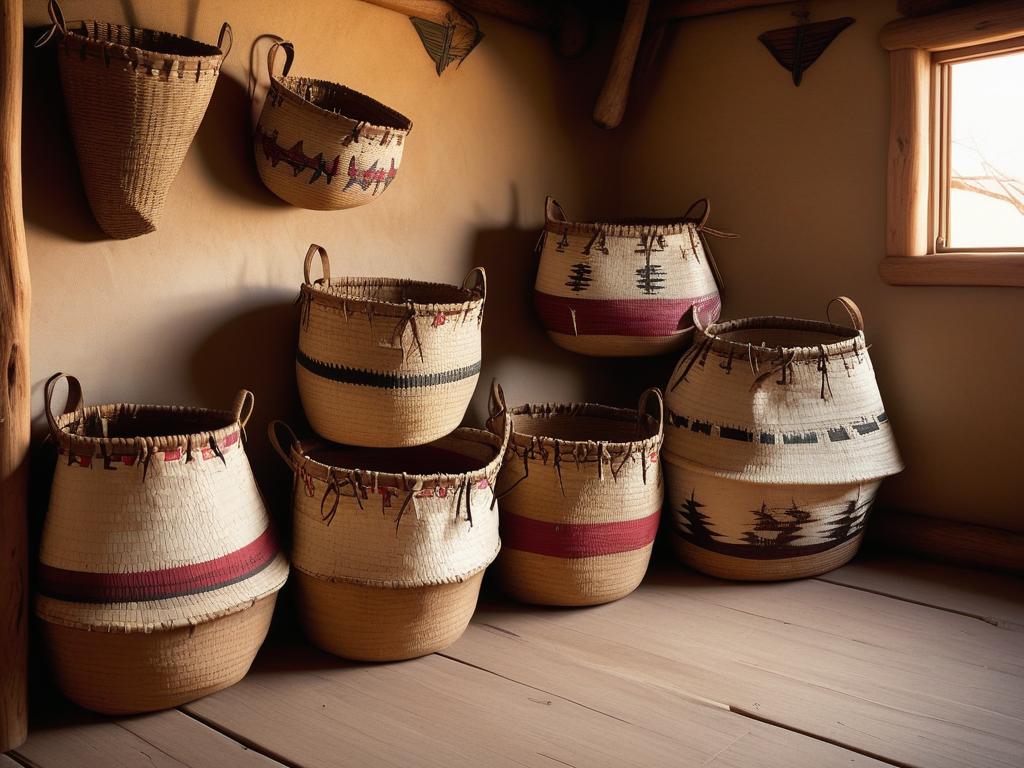
For items that needed more airflow—like wintering corn, seeds, or certain leathery roots—woven containers were preferred.
- Willow Baskets: Tightly woven willow provided structural support for heavy loads of roots.
- Twined Fiber Bags: Made from Indian Hemp (Apocynum) or Slippery Elm bark, these bags were flexible and could be hung from the lodge poles to keep them away from ground moisture.
The Cache Pit: The Subterranean Vault
For long-term storage of surplus food (like dried corn, squash, and ground-nuts), many Plains nations, particularly the Mandan, Hidatsa, and Arikara, used subterranean cache pits.
- Engineering: A bell-shaped hole was dug into the floor of the lodge or a secret location nearby.
- Lining: The pit was lined with dry grass and willow branches to create an air gap between the soil and the food.
- Sealing: The top was covered with a buffalo hide, followed by logs and earth, making it indistinguishable from the surrounding ground.
- Preservation: The constant, cool temperature of the earth acted as a primitive refrigerator, keeping seeds viable for years.
Spiritual Preservation
Storage was not just about physical protection. Sacred seeds and certain powerful medicines were stored in bundles that required specific songs or prayers to be “opened.” This ensured that the knowledge of how to use the plant was preserved alongside the physical specimen.
Legacy of the Seed
The success of these storage systems is proven by the fact that many traditional seed varieties—some over 500 years old—were found in abandoned cache pits during the 20th century and successfully germinated. These “sleeping seeds” are a testament to the engineering brilliance of the Plains peoples.
Next in our Preparation Series: Field Notes: The Ethics of Documentation.