Shelter of the Plains: The Botany of the Lodge
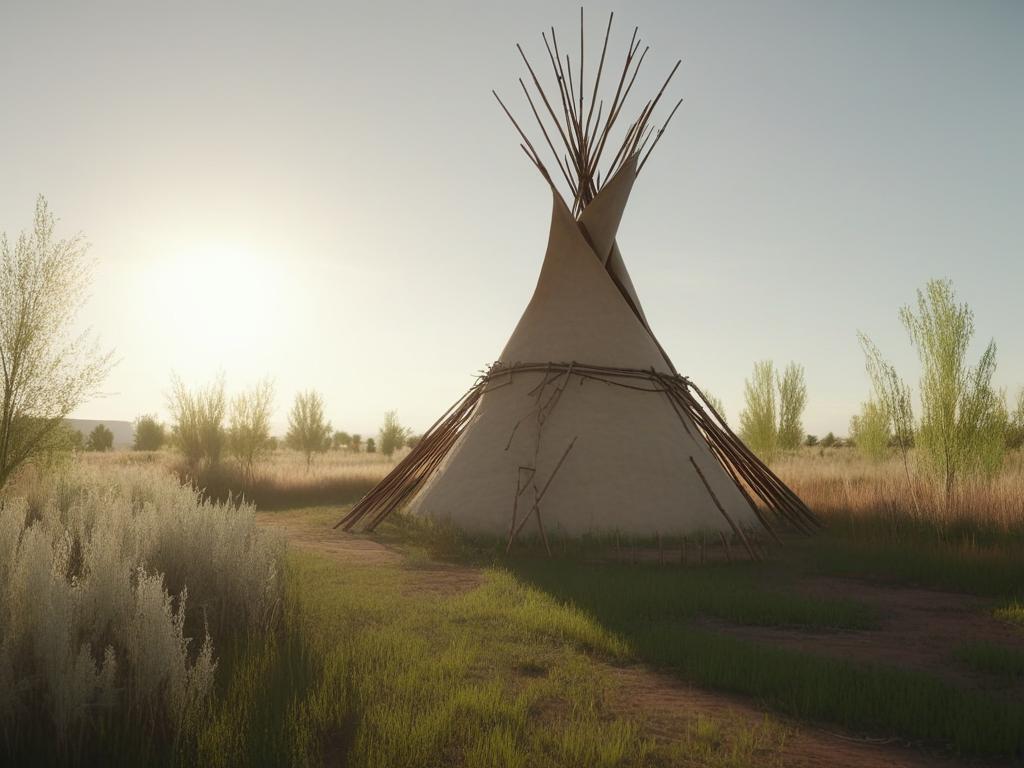
The Architecture of the Prairie
To the casual observer, the architecture of the Great Plains is defined by the tipi. But the ethnobotany of shelter on the Plains was far more diverse and technically sophisticated than a single structure suggests. It was a rigorous application of material science, thermodynamics, and structural engineering designed to conquer a landscape of violent storms, extreme UV exposure, and seasonal temperature swings of over 100 degrees.
From the massive, multi-ton timber frames of the Mandan and Hidatsa earth lodges to the light-weight, highly-mobile frames of the nomadic tipi, every beam, lashing, and thatch-mat was a deliberate botanical choice. In this 2,000-word analysis, we explore the primary plant species that provided the skeleton and the skin of the Plains world: the Cottonwood, the Willow, and the Great Plains grasses.
1. The Cottonwood (Populus deltoides): The Great Skeleton
The Cottonwood is the undisputed king of Plains architecture. Along the river valleys, it grows with a speed and straightness that seems almost designed for construction. For the Earth Lodge peoples of the Missouri River valley, the Cottonwood was the “sacred pillar” of the community.
Botanical Engineering Properties
- Strength-to-Weight Ratio: While not as dense as oak, Cottonwood is remarkably lightweight when dried. This was critical for the nomadic nations who had to transport lodge poles (up to 30 feet long) across miles of open prairie.
- Axial Straightness: Unlike the gnarled oaks of the uplands, cottonwoods growing in competitive river bottoms reach straight for the sun. This provided the uniform, tapering poles required for the conical geometry of the tipi.
- Shock Absorption: Cottonwood is a “soft” hardwood. It has a natural elasticity that allows it to flex under the intense wind-loads of a prairie tornado without shattering.
The Earth Lodge Frame
For the stationary village nations (Mandan, Hidatsa, Arikara), the Cottonwood was used to create massive, permanent structures.
- The Four Pillars: The central support comprised four massive cottonwood logs, sometimes over two feet in diameter. These pillars supported the entire weight of the earthen roof (thousands of pounds of soil and grass).
- The Cantilever Logic: The roof was engineered as a series of concentric circles of beams, allowing the weight to be distributed outward toward the perimeter walls. This structural logic allowed these lodges to reach 40 to 60 feet in diameter with an unobstructed central floor space.
2. The Willow (Salix spp.): The Flexible Framework
If the Cottonwood was the bone of Plains architecture, the Willow was the connective tissue and the specialized frame.
The Sweat Lodge (Inípi)
The Sweat Lodge is perhaps the most iconic secondary structure on the Plains, and its botanical composition is non-negotiable.
- The Sapling Frame: Willow saplings are used because of their extreme flexibility when fresh. They are bent into two sets of intersecting arches, creating a dome.
- The Physics of the Arch: The dome shape of the willow sweat lodge is one of the most structurally efficient forms in nature. It resists wind from any direction equally and provides the maximum volume for the minimum surface area—essential for retaining the high-temperature steam of the ceremony.
- The Sage Floor: The “flooring” of the lodge was almost always a thick carpet of White Sage (Pȟežíȟóta). This served a dual purpose: providing a soft, insulated surface for the participants and releasing antimicrobial, aromatic oils when triggered by the heat and steam.
The Summer Arbor
During the intense heat of July and August, the enclosed lodges were often too hot. Families built “arbors”—open-sided structures with a lattice roof of willow branches. These provided 100% shade while allowing the prairie breeze to pass through, creating a natural evaporative cooling effect.
3. Grasses and Sedges: The Botanical Skin
While the leather of the bison provided the primary cover for the tipi, botanical materials were used for the thatching and insulation of more permanent dwellings.
Big Bluestem and Cordgrass
- Big Bluestem (Andropogon gerardii): Known for its height (up to 8 feet), it was the primary material for the “matting” that lay between the wooden beams and the soil roof of an earth lodge.
- Prairie Cordgrass (Spartina pectinata): This grass has a high silica content, making it naturally water-repellent and resistant to rot. It was woven into thick mats and used as the “shingle” layer of the lodge, shedding water away from the inner wooden frame.
The Science of the “Earthen Mask”
The earth lodge utilized the thermal mass of the soil. By covering the botanical frame with a layer of grass mats and then 6 to 12 inches of packed earth, the residents created a “thermal battery.” In the winter, the earth trapped the warmth of the central fire; in the summer, the slow thermal conductivity of the soil kept the interior cool, even when the prairie outside was a blistering 100°F.
4. The Thermodynamics of the Tipi Frame
A tipi is not just a tent; it is a sophisticated ventilation chimney.
- The Cone Effect: The conical shape (wider at the base) creates a natural updraft.
- The Lining: A “lining” (or dew-cloth) of grass mats or hide was often suspended from the inside of the poles. This created a secondary air-gap.
- Convection Logic: Cool air was drawn in from the bottom of the outer cover, passed through the air-gap, and pushed the warm, smoky air out the top smoke hole. This “double-wall” insulation kept the interior dry and warm, even in the most intense rainstorms.
5. The Preservation of the Wood: Fire and Resin
Plains engineers understood out to protect their botanical assets from the two great threats: decay and insects.
- Fire-Hardening: The ends of lodge poles that touched the ground were often “charred” in a fire. This created a layer of carbon that was naturally resistant to moisture and wood-boring insects.
- Peeling: Cottonwood poles were stripped of their bark immediately after harvesting. This prevented the “cambium layer” from fermenting and attracting pests. The resulting smooth surface allowed the tipi cover to slide up and down without snagging.
6. Cultural Significance: The Lodge as a Living Organism
In many Plains traditions, the lodge was seen as a reflection of the cosmos.
- The Four Poles: The primary poles of the tipi often represented the four directions or four central virtues.
- The Center: The hearth was the heart, and the smoke-hole was the connection to the spirit world.
- The Lifecycle: When a village moved, the lodge poles were not discarded. They were groomed, repaired, and treated with as much care as a weapon. A set of straight, seasoned cottonwood poles was a prized family heirloom, often passed down from mother to daughter.
7. Materials Beyond Wood: The Role of Roots and Bark
Lashing together a 40-foot bridge or a multi-ton lodge required more than just gravity.
- Spruce & Pine Root: In the northern and western plains, the long, flexible roots of the spruce or pine were used as “sewing” material for bark-covered lodges.
- Elm Bark: Prior to the dominance of the bison-hide tipi, many nations in the eastern transition zones used large sheets of Slippery Elm bark as the primary siding for their lodges. Elm bark is incredibly durable and becomes “leather-like” when properly cured.
8. Modern Ethnobotany: The Lessons of Low-Impact Shelter
As the modern world grapples with the energy cost of construction, the botanical architecture of the Plains offers a blueprint for regenerative building.
- Thermal Mass: The principle of the earth lodge is the direct ancestor of modern “earth-ship” and passive solar design.
- Material Sourcing: Using fast-growing, local species like Cottonwood reduces the “embodied energy” of a home to nearly zero.
- Biodegradability: A traditional lodge, if abandoned, returns to the earth without a trace of toxic residue. It is the ultimate expression of a circular economy.
View Traditional Tipi and Lodge Building Resources on Amazon
Technical Summary: Structural Botany of the Plains
| Material | Structural Role | Botanical Advantage |
|---|---|---|
| Cottonwood | Main Poles/Timbers | Lightweight, straight, fast-growing |
| Willow | Arch Frames/Lattice | Extreme flexibility, resilient |
| Big Bluestem | Thatch/Roofing Mat | High volume, provides “grip” for soil |
| Pine Root | Binding/Sewing | High tensile strength, rot-resistant |
| Red Cedar | Ritual Lashing/Beams | Insect-repellent, rot-resistant |
Next in our Materials Series: Tools & Glue: The Botany of the Hardware Store.