Infusions & Decoctions: Extracting the Spirit
The Power of Water
While many plants can be consumed raw or dried, the most potent medicinal delivery systems on the Great Plains were liquid extractions. Water—the universal solvent—was used to “unlock” the chemical spirits of the plants. Understanding the difference between an infusion and a decoction is fundamental to traditional ethnobotany.
Infusions: The Gentle Pull
An infusion is the process of soaking plant material (usually leaves, flowers, or delicate stems) in hot water.
- Method: Water is brought to a boil and then removed from the fire. The plant material is added to the hot water and covered.
- Time: Usually steeped for 10 to 20 minutes.
- Why: This method protects volatile oils and vitamins that might be destroyed by active boiling.
- Example: Monarda (Pehíŋ) or Wild Mint tea were almost always prepared as infusions to preserve the menthol and cooling aromatic oils.
Decoctions: The Deep Extraction
A decoction involves active boiling of the plant material. This is reserved for the “tough” parts of the plant: roots, bark, and seeds.
- Method: The plant material is placed in cold water, brought to a boil, and allowed to simmer (slow boil) for a significant period.
- Time: Usually 20 to 45 minutes, sometimes longer.
- Why: Active boiling is required to break down the tough cellulose and lignin in roots to release alkaloids, tannins, and minerals.
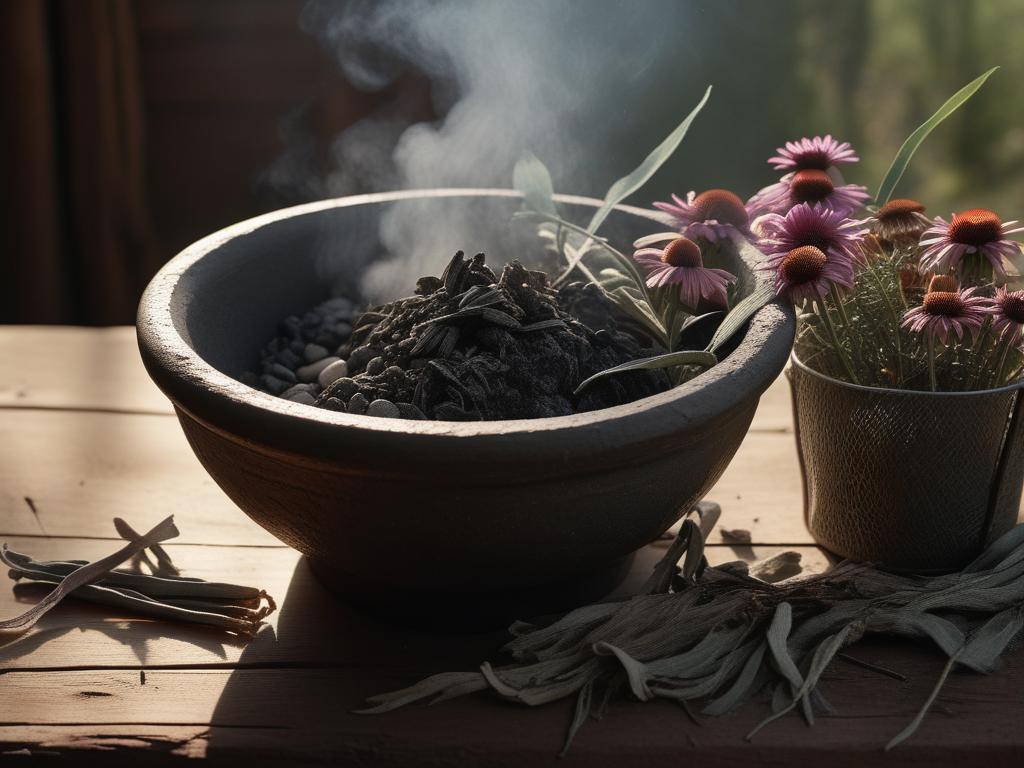
- Example: Echinacea (Ičháȟpe-hú) or Willow Bark (Čháŋšaša) were always decocted. The thick, fibrous roots of Echinacea require the heat and agitation of boiling to release their immune-stimulating compounds.
Traditional Equipment
Historically, extraction was performed in a variety of vessels:
- Stomach Bags: Prior to the arrival of metal pots, water was often boiled inside a clean buffalo stomach suspended from a tripod. Hot stones were dropped into the bag to bring the liquid to temperature.
- Stone Bowls: Certain infusions were made by placing hot stones directly into water-filled stone depressions.
- Clay & Metal: Later periods saw the use of earthenware and eventually brass or iron trade kettles.
Timing and Dosage
Ethnobotanical extractions were rarely measured with scales. Instead, “pinches” and “handfuls” were the units of measure. The strength of the extraction was often determined by color and taste—a “bitter” decoction usually indicated a high concentration of medicinal alkaloids.
Respecting the Extract
In many Plains cultures, the liquid extraction was seen as more than just a chemical solution; it was a living spirit. The remaining plant material (the “marc”) was never simply discarded. It was often buried or returned to the water, completing the cycle of the plant’s life.
Next in our Preparation Series: Traditional Poultices: Topical Healing from the Earth.