Berries and Fruits of the Prairie: The Sky's Sweetness
The Seasonal Burst of Color
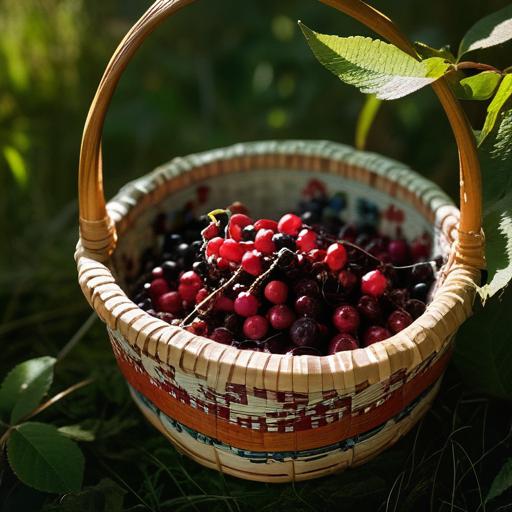
While the vast grasslands of the Great Plains are known for their grasses and hardy roots, the coulees, river bottoms, and forest margins provide a seasonal burst of color and sweetness in the form of wild berries and fruits. For the indigenous nations such as the Lakota, Blackfeet, Crow, and Cheyenne, these fruits were more than just a seasonal treat; they were an essential nutritional component, a key ingredient in food preservation, and a deeply embedded part of their cultural and spiritual life.
In this study, we examine the primary berries and fruits of the prairie, their harvesting techniques, and their role in the ultimate survival food: Pemmican.
The Big Three: Serviceberry, Chokecherry, and Buffaloberry
While dozens of species were utilized, three stood out as the most critical for survival and large-scale preservation.
1. Saskatoon Serviceberry (Amelanchier alnifolia)
Often called “the serviceberry” or “Juneberry,” the Saskatoon was widely regarded as the finest-tasting fruit on the plains. It ripens in mid-to-late summer, turning from a bright red to a deep, dusty blue-black.
Harvest & Use: Serviceberries were often harvested by spreading robes or mats beneath the bushes and shaking the branches. They were eaten fresh in great quantities, but their most important use was in drying. Because of their high sugar content and relatively low moisture, they dried easily in the sun. Dried serviceberries were a primary ingredient in high-quality pemmican.
2. Chokecherry (Prunus virginiana)
The chokecherry is perhaps the most culturally significant berry on the plains. Although intensely astringent when raw (hence the name), it becomes sweet and flavorful when processed correctly.
Processing: Unlike other berries, chokecherries were traditionally pounded whole—pits and all—on a stone mortar. The pits contain a small amount of oil and protein that contributes to both the flavor and nutritional value of the final product. The resulting paste was molded into small, round cakes and dried in the sun. These dried chokecherry cakes were a winter staple and were often reconstituted in soups or stews.
3. Buffaloberry (Shepherdia argentea)
The silver-leaved buffaloberry produces bright red, translucent fruits that are intensely tart. They are unique among prairie fruits because they often remain on the bush well into the winter, often becoming sweeter after the first few frosts.
Harvest & Use: Buffaloberries were traditionally harvested in the late fall or early winter by beating the thorny bushes with a stick to drop the frozen berries onto a robe. Because of their high acidity, they were excellent for cutting the richness of fatty meats.
The Science of Pemmican
The most important technological use of berries was in the creation of Pemmican (wasná in Lakota). Pemmican was the world’s first true “superfood”—a dense, shelf-stable, and highly nutritious ration that could sustain a person for days in extreme conditions.
The Ingredients:
- Dried Meat: Usually bison or elk, pounded into a fine, fibrous powder.
- Rendered Fat: High-quality tallow (usually from the back fat or marrow) used as a binding and preserving agent.
- Dried Berries: Serviceberries and chokecherries were the preferred choices.
The Process:
The powdered meat and dried berries were mixed together, and the hot, liquid fat was poured over the mixture. As the fat cooled and solidified, it encased the meat and fruit in an airtight seal, preventing oxidation and spoilage.
The berries provided more than just flavor; their Vitamin C content prevented scurvy (a major risk for meat-heavy diets), and their natural acids and sugars acted as mild preservatives. A well-made pouch of pemmican could remain edible for years.
The Ecology of Berries
Indigenous gatherers were keen observers of berry ecology. They knew that berries were most abundant in “disturbed” areas—the edges of forests, the zones recently cleared by fire, and the moist thickets along streams. By managing the landscape with fire, they indirectly stimulated the growth of these critical fruit-bearing species.
Cultural and Spiritual Significance
Berries were deeply integrated into ceremonial life. The Lakota’s Sun Dance, for example, often concludes with a feast that includes a berry pudding known as wožapi. The abundance of berries was seen as a sign of the earth’s health and the favor of the spirits. Sharing berries was an act of hospitality and communal bonding.
Conclusion: A Sweet Legacy
The wild berries and fruits of the Great Plains represent a sophisticated understanding of nutrition and food technology. By combining the sky’s sweetness with the earth’s strength (meat), indigenous peoples created a food system that was as resilient as it was delicious. Today, as we rediscover the benefits of wild, nutrient-dense foods, the berries of the prairie stand as a vibrant reminder of the natural wealth that surrounds us when we know how to look.
This concludes our initial series on Indigenous Foodways. Our next category of study will focus on Traditional Methods and Preparation.